- Space
- Astronomy
- Black Holes
The discovery of a hidden supermassive black hole inside an ancient galaxy suggests that some of our universe's most extreme objects could be invisible unless observed in infrared wavelengths, James Webb telescope observations reveal.
When you purchase through links on our site, we may earn an affiliate commission. Here’s how it works.
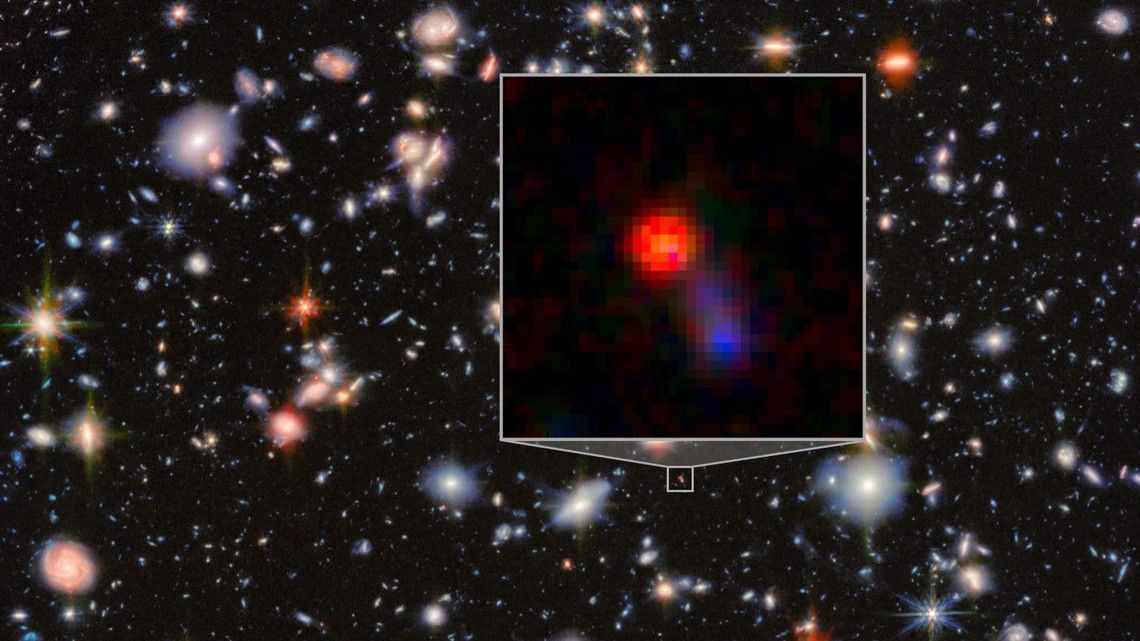
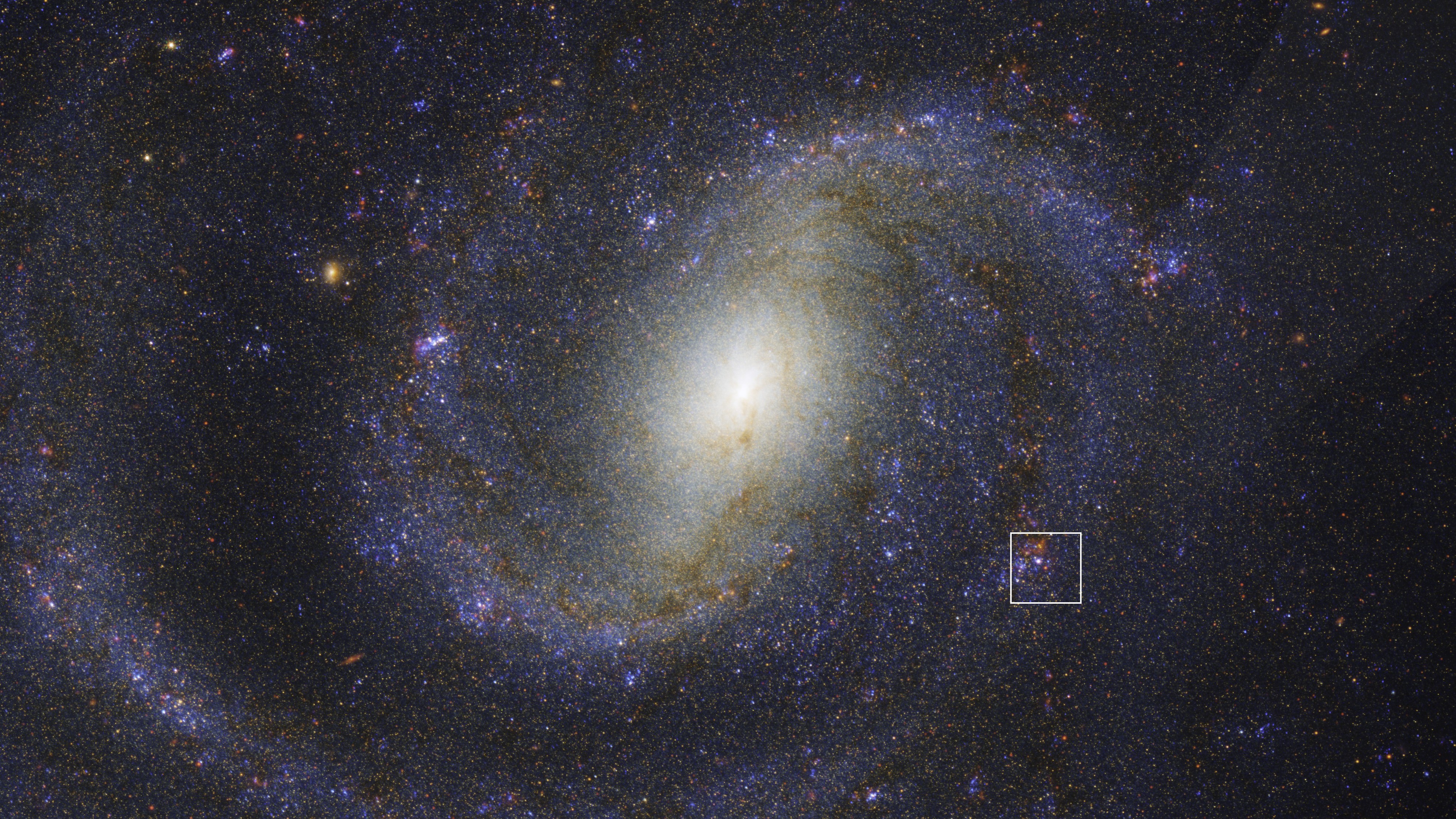
 Researchers have studied an ancient "Jekyll and Hyde" galaxy, nicknamed Virgil, highlighted here among thousands of other galaxies.
(Image credit: ESA/Webb, NASA & CSA, G. Östlin, P. G. Perez-Gonzalez, J. Melinder, the JADES Collaboration, M. Zamani (ESA/Webb))
Share
Share by:
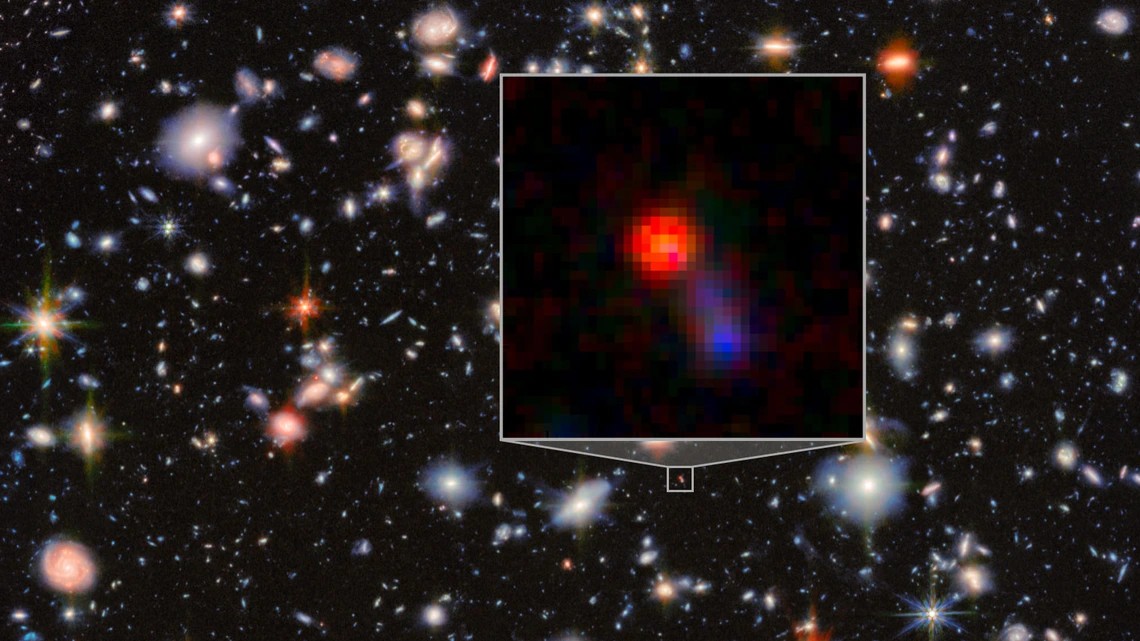
Researchers have studied an ancient "Jekyll and Hyde" galaxy, nicknamed Virgil, highlighted here among thousands of other galaxies.
(Image credit: ESA/Webb, NASA & CSA, G. Östlin, P. G. Perez-Gonzalez, J. Melinder, the JADES Collaboration, M. Zamani (ESA/Webb))
Share
Share by:
- Copy link
- X
NASA's James Webb Space Telescope (JWST) has detected a supermassive black hole hiding in an ancient "Jekyll and Hyde" galaxy that changes its appearance depending on how you look at it.
The galaxy, nicknamed Virgil, looked like an ordinary star-forming galaxy when observed in optical wavelengths (the kind of light that human eyes and optical telescopes like Hubble can see). However, when JWST viewed the object in infrared via its Mid-Infrared Instrument (MIRI), a monster black hole became visible in the galaxy's core.
"Virgil has two personalities," George Rieke, an astronomer at the University of Arizona who co-led the discovery, said in a statement released Dec. 10. "The UV and optical show its 'good' side — a typical young galaxy quietly forming stars. But when MIRI data are added, Virgil transforms into the host of a heavily obscured supermassive black hole pouring out immense quantities of energy."
You may like-
 James Webb telescope may have discovered the earliest, most distant black hole ever seen
-
 'Not so exotic anymore': The James Webb telescope is unraveling the truth about the universe's first black holes
-
 James Webb telescope finds something 'very exciting' shooting out of first black hole ever imaged
Rieke and his colleagues published their findings Nov. 17 in The Astrophysical Journal. The findings suggest that some of our universe's most extreme objects could be invisible unless observed in infrared wavelengths.
Light takes a long time to travel across the galaxy, so when a powerful telescope like JWST observes distant objects, it sees the objects as they appeared in the distant past. Basically, JWST acts like a time machine into the early universe. Virgil appears to JWST as it existed 800 million years after the Big Bang. (For context, the universe is thought to be around 13.8 billion years old.)
The researchers classified Virgil as a little red dot (LRD). This is the name given to mysterious red objects that appear in JWST observations of the distant, early universe, and that astronomers don't fully understand.
LRDs appear in large numbers at around 600 million years after the Big Bang, before rapidly declining at around 1.5 billion years after the Big Bang. Observing galaxies like Virgil should help researchers unravel the mysteries of LRDs, which have been linked to actively feeding supermassive black holes that are heavily obscured by dust.
Sign up for the Live Science daily newsletter nowContact me with news and offers from other Future brandsReceive email from us on behalf of our trusted partners or sponsorsBy submitting your information you agree to the Terms & Conditions and Privacy Policy and are aged 16 or over.JWST's Virgil observations also help researchers better understand how supermassive black holes grew in the early universe. The one at the center of Virgil was a so-called "overmassive" black hole — meaning a massive black hole that shouldn't be able to exist in a host galaxy of that size, according to the statement.
RELATED STORIES—'A scale almost too big to imagine': Scientists spot monster black hole roaring with winds at more than 130 million mph
—Mysterious X-ray signal from deep space may be the scream of a star ripped apart by two black holes
—James Webb telescope does it again: The earliest black hole in the known universe may have been found
Astronomers used to think that black holes at the centers of galaxies grew at the same rate as their hosts, with the galaxies forming first and growing black holes over time as large quantities of matter coalesced at their centers. However, JWST observations like this one suggest that the opposite might be true — first comes the black hole, then the galaxy around it.
"JWST has shown that our ideas about how supermassive black holes formed were pretty much completely wrong," Rieke said. "It looks like the black holes actually get ahead of the galaxies in a lot of cases. That's the most exciting thing about what we're finding."
TOPICS James Webb Space Telescope NASA Patrick PesterSocial Links NavigationTrending News Writer
Patrick Pester is the trending news writer at Live Science. His work has appeared on other science websites, such as BBC Science Focus and Scientific American. Patrick retrained as a journalist after spending his early career working in zoos and wildlife conservation. He was awarded the Master's Excellence Scholarship to study at Cardiff University where he completed a master's degree in international journalism. He also has a second master's degree in biodiversity, evolution and conservation in action from Middlesex University London. When he isn't writing news, Patrick investigates the sale of human remains.
Show More CommentsYou must confirm your public display name before commenting
Please logout and then login again, you will then be prompted to enter your display name.
Logout Read more James Webb telescope finds something 'very exciting' shooting out of first black hole ever imaged
 'Puzzling' object discovered by James Webb telescope may be the earliest known galaxy in the universe
 Rarrr! James Webb telescope spots 'monster stars' leaking nitrogen in the early universe
 Hidden 'doomed' star revealed by James Webb Space Telescope could solve decades-old mystery
 James Webb telescope could have spotted controversial 'dark stars' in the far universe
 James Webb telescope finds 'remarkable' evidence that a black hole plowed through a galaxy, leaving an enormous scar behind
Latest in Black Holes
James Webb telescope finds 'remarkable' evidence that a black hole plowed through a galaxy, leaving an enormous scar behind
Latest in Black Holes
 'A scale almost too big to imagine': Scientists spot monster black hole roaring with winds at more than 130 million mph
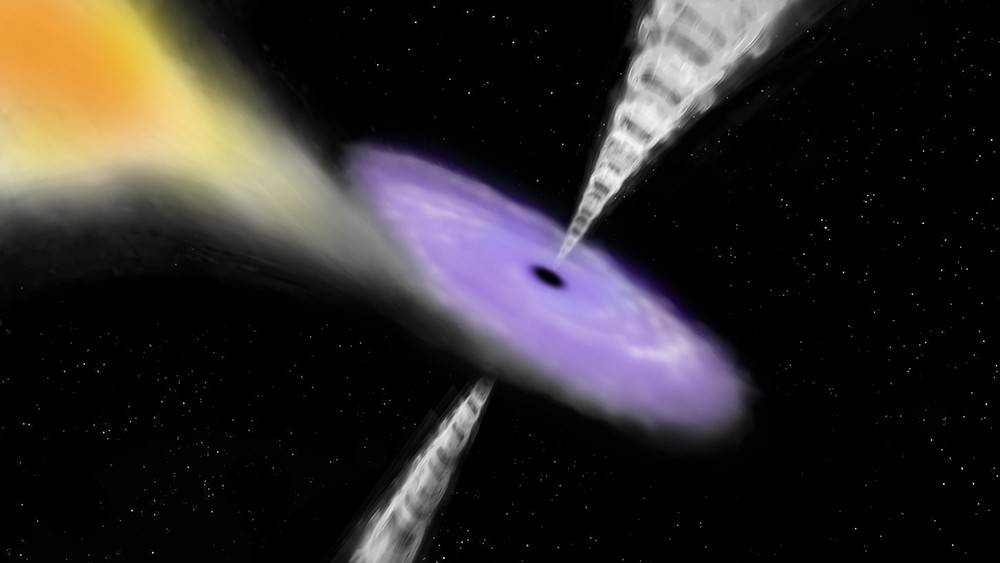 Scientists spot 2 black holes that took turns slaughtering 1 unlucky star
 James Webb telescope may have discovered the earliest, most distant black hole ever seen
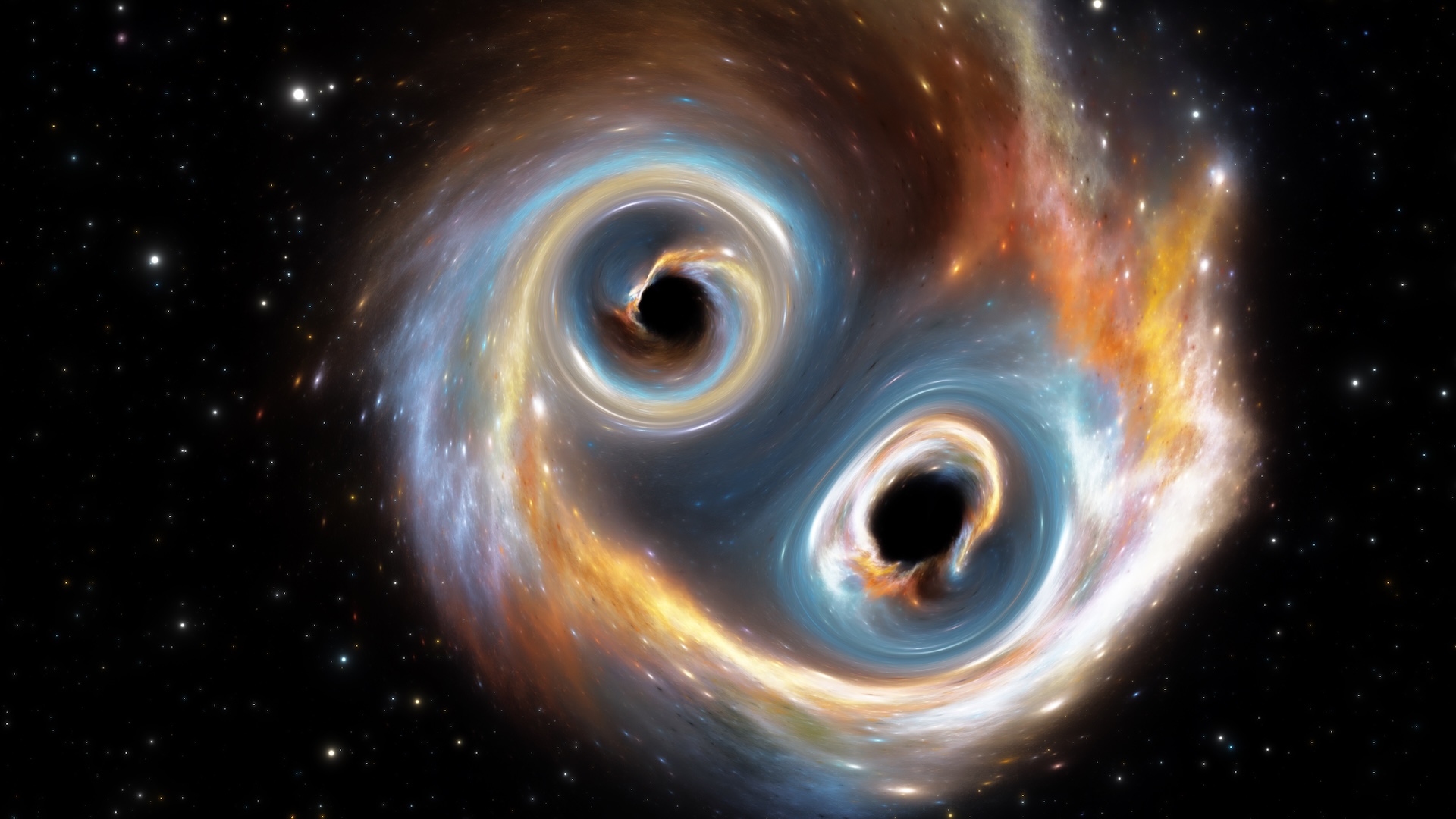 Record-breaking black hole collision finally explained
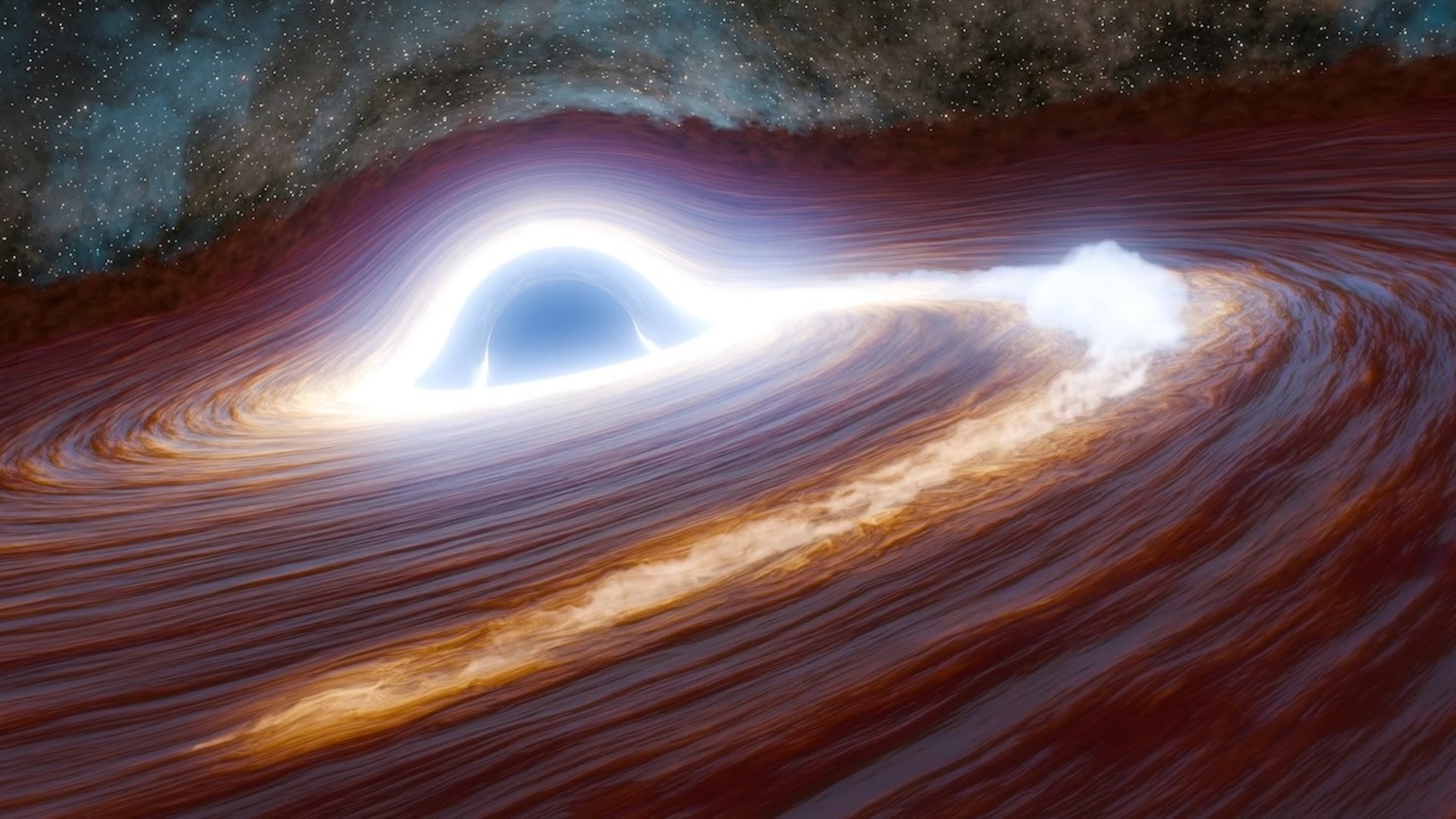 'Unlike any we've ever seen': Record-breaking black hole eruption is brighter than 10 trillion suns
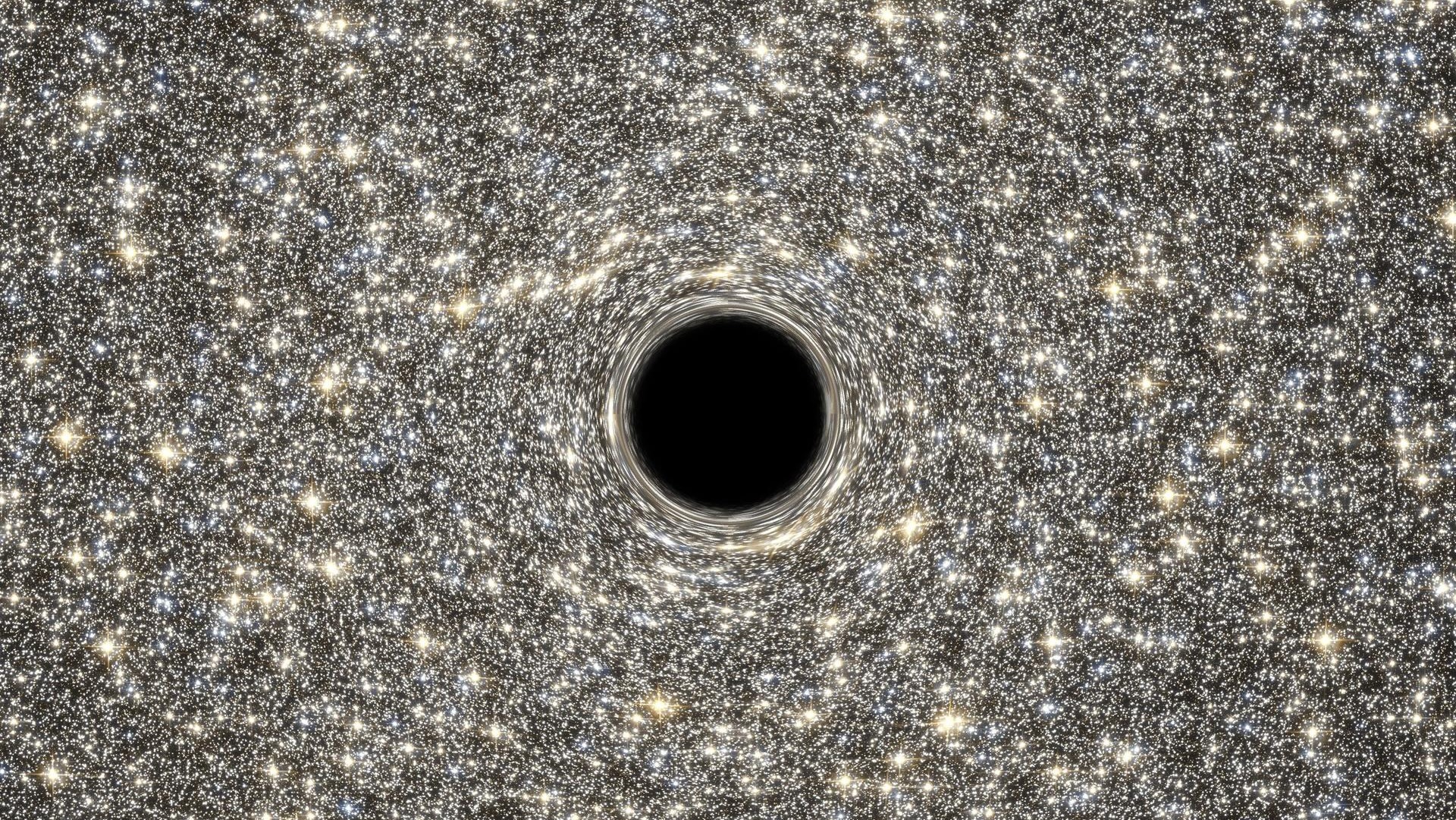 'Torn apart by the darkness': What would happen if a human fell into a black hole?
Latest in News
'Torn apart by the darkness': What would happen if a human fell into a black hole?
Latest in News
 Scientists build 'most accurate' quantum computing chip ever thanks to new silicon-based computing architecture
 Japan laser weapon trial, comet 3I/ATLAS bids farewell, and AI solves 'impossible' math problems
 Interstellar comet 3I/ATLAS makes closest pass of Earth. Where's it heading next?
 'Unprecedented' protoplanet collision spotted in 'Eye of Sauron' star system just 25 light-years from Earth
 Comet 3I/ATLAS reaches its closest point to Earth tonight: How to see it
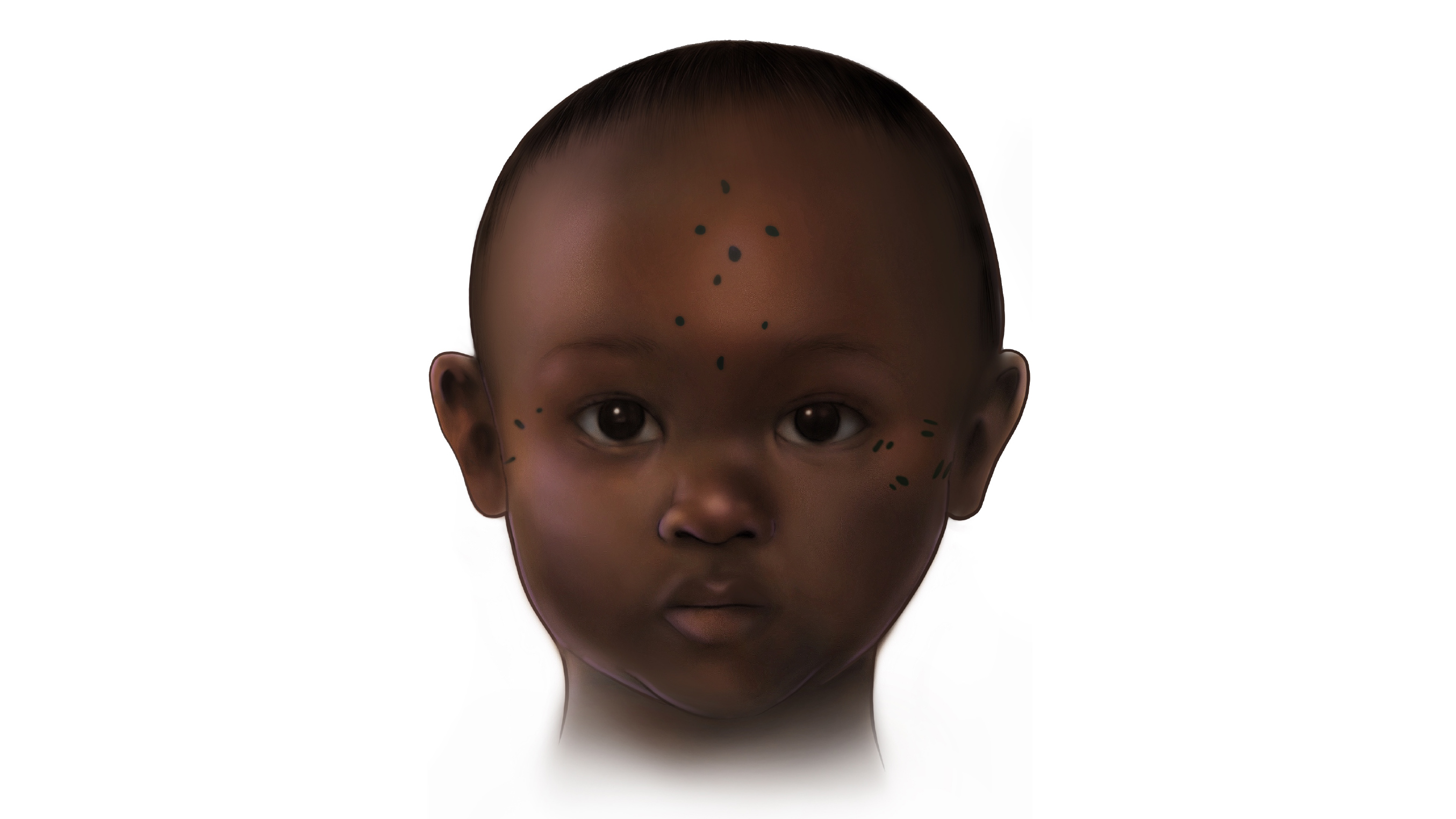 1,400 years ago, Nubians tattooed their toddlers. Archaeologists are trying to figure out why.
LATEST ARTICLES
1,400 years ago, Nubians tattooed their toddlers. Archaeologists are trying to figure out why.
LATEST ARTICLES 1The self-gifter's Christmas: Treat yourself to gear you'll actually want this Christmas
- 2Glittering new James Webb telescope image shows an 'intricate web of chaos' — Space photo of the week
- 3Why is Venus so bright?
- 4Celestron Showdown: Battle of the 10x42s
- 5Science news this week: Japan laser weapon trial, comet 3I/ATLAS bids farewell, and AI solves 'impossible' math problems