- Space
- Astronomy
- Planets
- Saturn
Decades ago, a spacecraft suggested Saturn's largest moon, Titan, had an ocean. New observations suggest that the liquid may look more like slush.
When you purchase through links on our site, we may earn an affiliate commission. Here’s how it works.
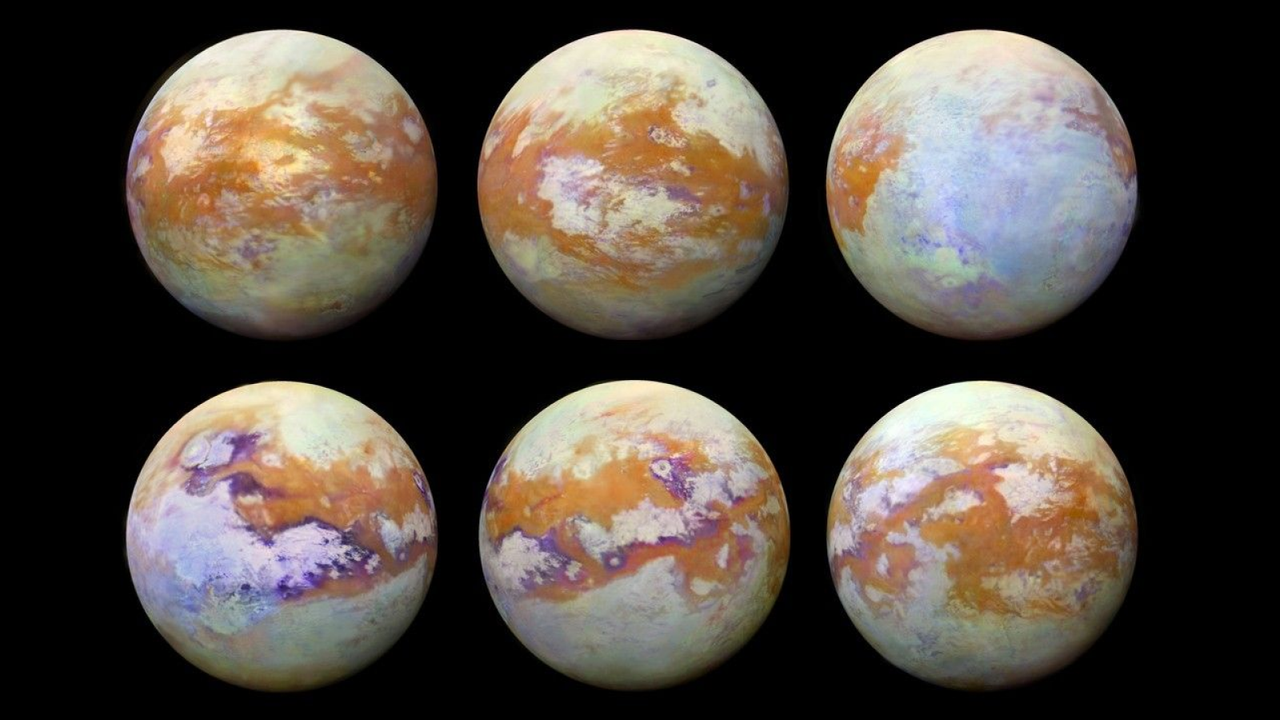
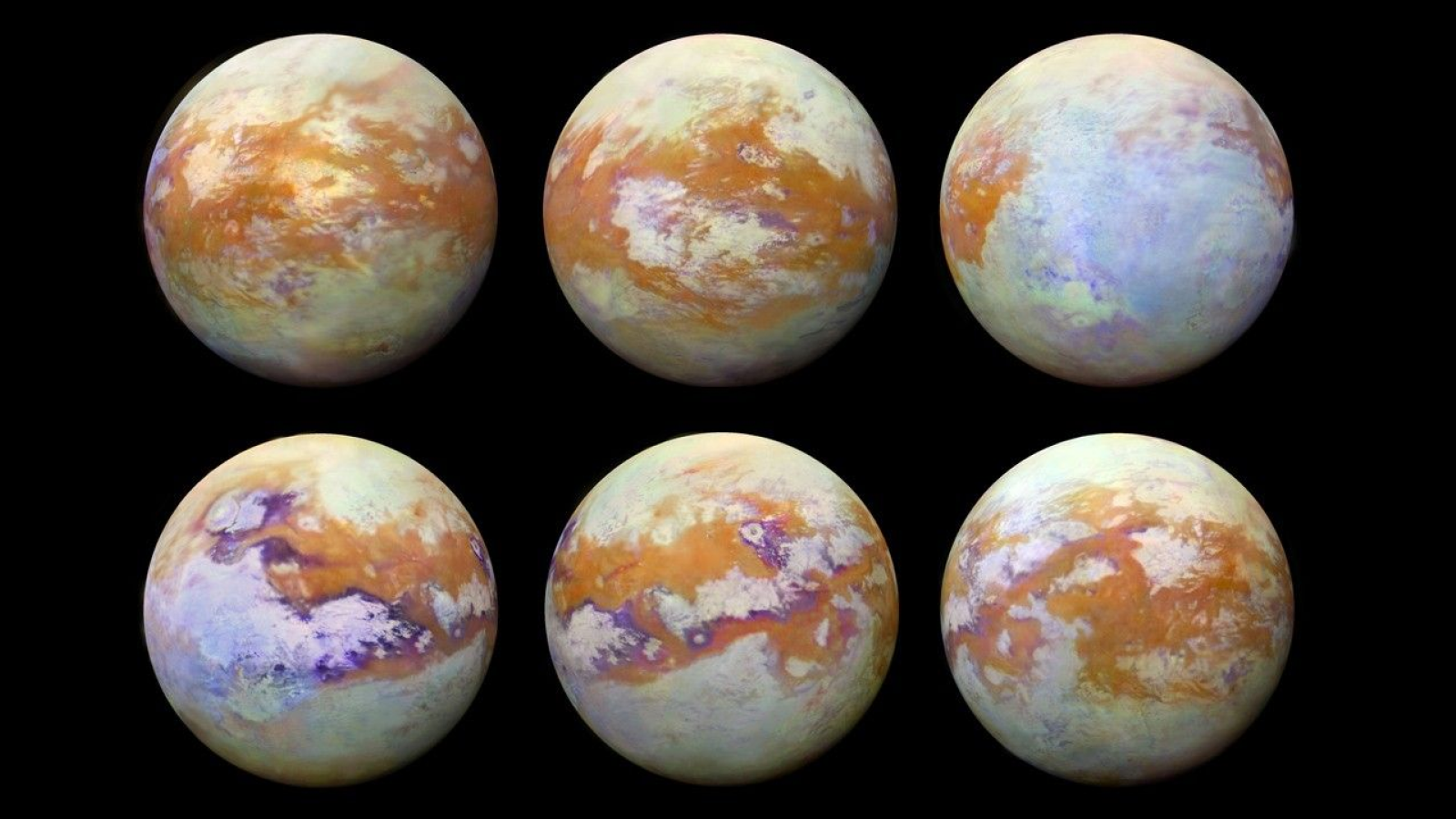 Six infrared images of Saturn's moon Titan, showing seas and other features on the surface.
(Image credit: NASA - https://science.nasa.gov/image-detail/amf-7c2a49e6-2a2d-4cac-ba34-9cdf257db3ec/)
Share
Share by:
Six infrared images of Saturn's moon Titan, showing seas and other features on the surface.
(Image credit: NASA - https://science.nasa.gov/image-detail/amf-7c2a49e6-2a2d-4cac-ba34-9cdf257db3ec/)
Share
Share by:
- Copy link
- X
Saturn's largest moon, Titan, may be hiding a habitable world of slushy sea ice, new research hints.
Back in 2008, NASA's Cassini spacecraft gathered data on Titan that suggested an open ocean might lurk beneath the moon's frozen crust. But the new analysis hints that what lies underneath is instead "slushy tunnels and pockets of meltwater," according to the investigators.
You may like-
 Scientists find best evidence yet that icy moon Enceladus is habitable
-
 On Saturn's largest moon, water and oil would mix — opening the door to exotic chemistry in our solar system
-
 Interstellar comet 3I/ATLAS is erupting in 'ice volcanoes', new images suggest
"Instead of an open ocean like we have here on Earth, we're probably looking at something more like Arctic sea ice or aquifers, which has implications for what type of life we might find, [and] also the availability of nutrients, energy and so on," study co-author Baptiste Journaux, an assistant professor of Earth and space sciences at the University of Washington, said in a statement.
The "smushing" moon
The story begins with Cassini, a spacecraft that launched in 1997 and spent much of its 20 years observing Saturn and its moons. Cassini spotted the shape of Titan "stretching and smushing" as it circled Saturn, according to the authors of the new study. Back then, the researchers proposed that if Titan possessed a deep ocean, that would let the crust flex under the pull of Saturn's gravity.
Now, the new study takes into account the timing of Titan's flexes. The team found that the shape of Titan begins to change only about 15 hours after Saturn exerts its strongest gravitational pull in Titan's orbit. The scientists then estimated the energy it would take for Titan's shape to alter, which, in turn, showed more about the mysterious moon's interior.
"Nobody was expecting very strong energy dissipation inside Titan," lead study author Flavio Petricca, a postdoctoral fellow at NASA's Jet Propulsion Laboratory, said in the statement. "That was the smoking gun indicating that Titan's interior is different from what was inferred from previous analyses."
Sign up for the Live Science daily newsletter nowContact me with news and offers from other Future brandsReceive email from us on behalf of our trusted partners or sponsorsBy submitting your information you agree to the Terms & Conditions and Privacy Policy and are aged 16 or over.Historically, Titan has always been hard to observe. The planet is shrouded in a thick, orange atmosphere that's rich in chemical compounds that may be precursors to life. Looking at the surface requires radar (which Cassini possessed, whereas predecessor flyby missions Voyager 1 and Voyager 2 did not). Cassini's observations revealed a bizarre surface where methane falls as rain, seas constantly shift, and temperatures stand around minus 297 degrees Fahrenheit (minus 183 degrees Celsius).
Titanic slushies
So what is going on in Titan’s interior? The new study says below the frozen exterior, the moon's innards appear to have ice, meltwater pockets and overall, a slushier environment than believed in 2008. The slush is thick and likely accounts for the observed lag in Titan's shape shifts. While water is believed to be in the slush, it wouldn't be as liquid as an open ocean, the team found.
Aside from recycling the old Cassini radio-wave observations, the researchers used new thermodynamic models developed by Journaux's lab to study how water, minerals and other components behave on worlds like Titan.
You may like-
Scientists find best evidence yet that icy moon Enceladus is habitable
-
Interstellar comet 3I/ATLAS is erupting in 'ice volcanoes', new images suggest
-
 Spiders on Jupiter? Scientists uncover secret origins of arachnid-like 'demon' lurking on gas giant's moon.
"The watery layer on Titan is so thick, the pressure is so immense, that the physics of water changes," Journaux said. "Water and ice behave in a different way than sea water here on Earth."
Expanding the search for life
RELATED STORIES—Mysterious 'magic' islands that come and go on Saturn's moon Titan finally have an explanation
—Largest sea on Titan could be more than 1,000 feet deep
—Saturn's moon Titan may have a 6-mile-thick crust of methane ice — could life be under there?
While at first this lack of a full ocean sounds like a blow to the search for life, the research team emphasized that instead, "It expands the range of environments we might consider habitable," Jones said.
Scientists also found that “pockets of fresh water” may exist within Titan at life-friendly temperatures of 68 degrees Fahrenheit (20 degrees Celsius). Moreover, nutrients would be concentrated in small pools of this water, perhaps allowing for more rich conditions for life than a less-concentrated ocean would.
Upcoming observations may aid our understanding of Titan. NASA's Dragonfly mission is set to launch as soon as 2028, and it should arrive at Titan in 2034. It will be the second flying vehicle on another world besides Earth, after Ingenuity, a helicopter on Mars. It is hoped that Dragonfly's surface observations of Titan will reveal more about where life may be lurking and how much water might be available for organisms.
 Elizabeth HowellLive Science Contributor
Elizabeth Howell was staff reporter at Space.com between 2022 and 2024 and a regular contributor to Live Science and Space.com between 2012 and 2022. Elizabeth's reporting includes multiple exclusives with the White House, speaking several times with the International Space Station, witnessing five human spaceflight launches on two continents, flying parabolic, working inside a spacesuit, and participating in a simulated Mars mission. Her latest book, "Why Am I Taller?" (ECW Press, 2022) is co-written with astronaut Dave Williams.
Show More CommentsYou must confirm your public display name before commenting
Please logout and then login again, you will then be prompted to enter your display name.
Logout Read more Scientists find best evidence yet that icy moon Enceladus is habitable
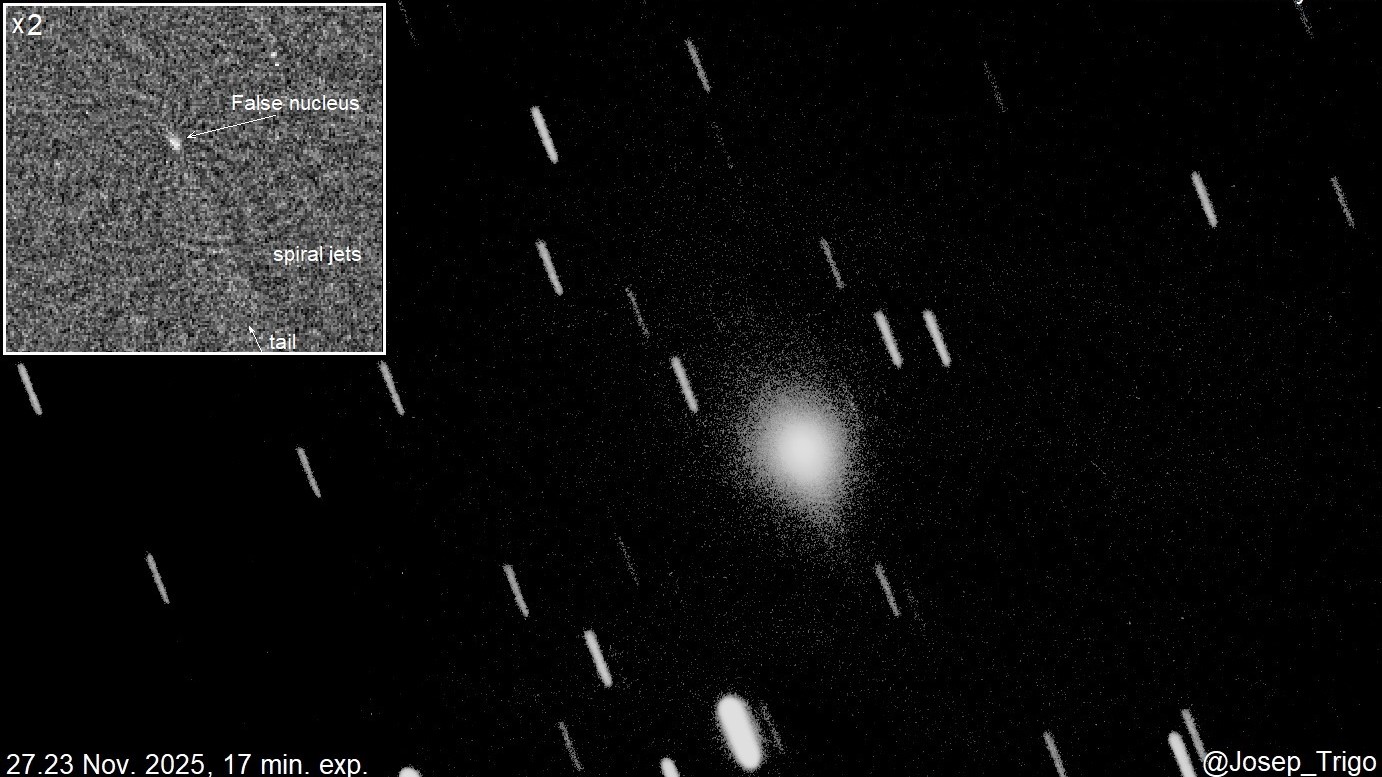 Interstellar comet 3I/ATLAS is erupting in 'ice volcanoes', new images suggest
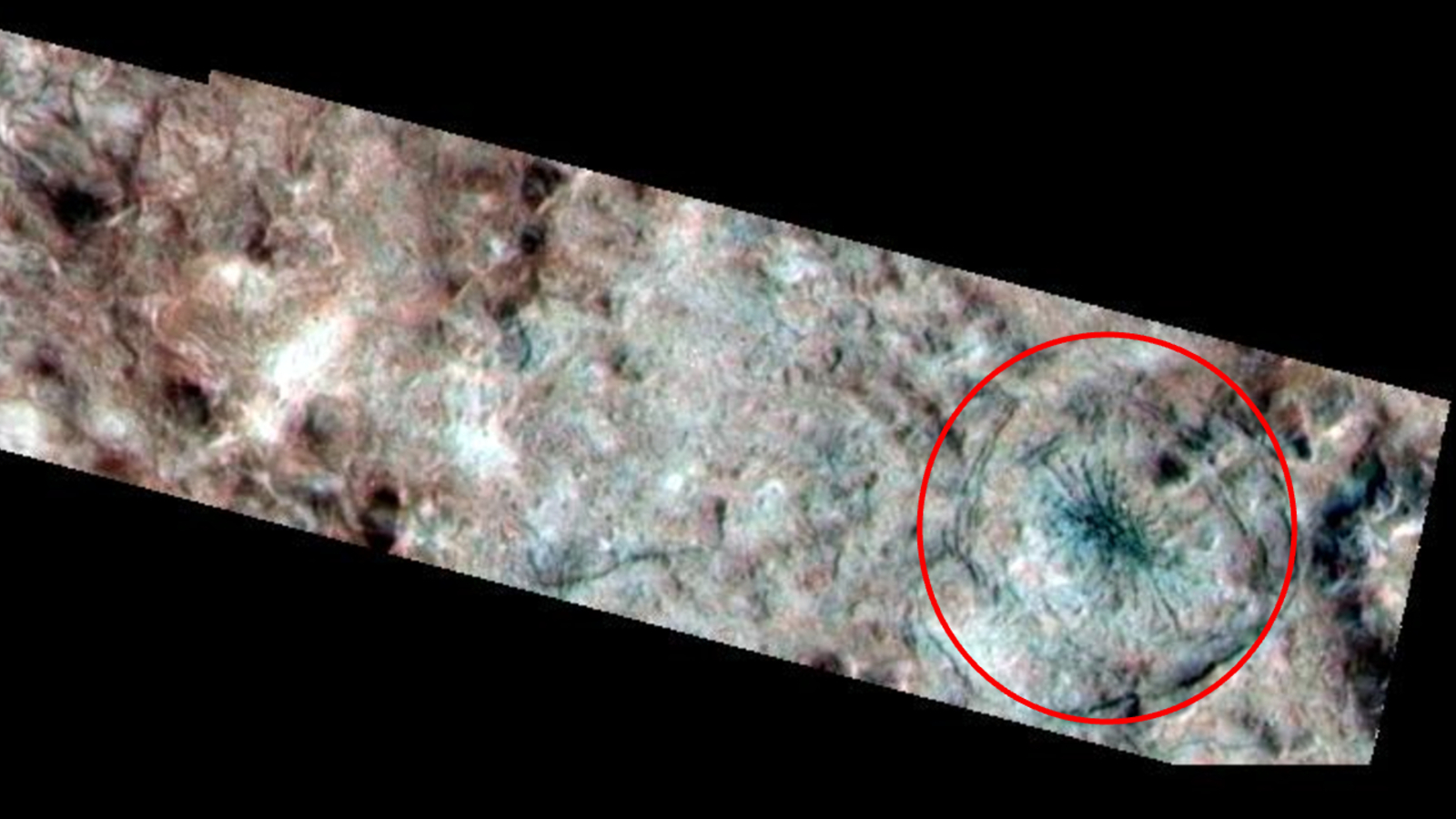 Spiders on Jupiter? Scientists uncover secret origins of arachnid-like 'demon' lurking on gas giant's moon.
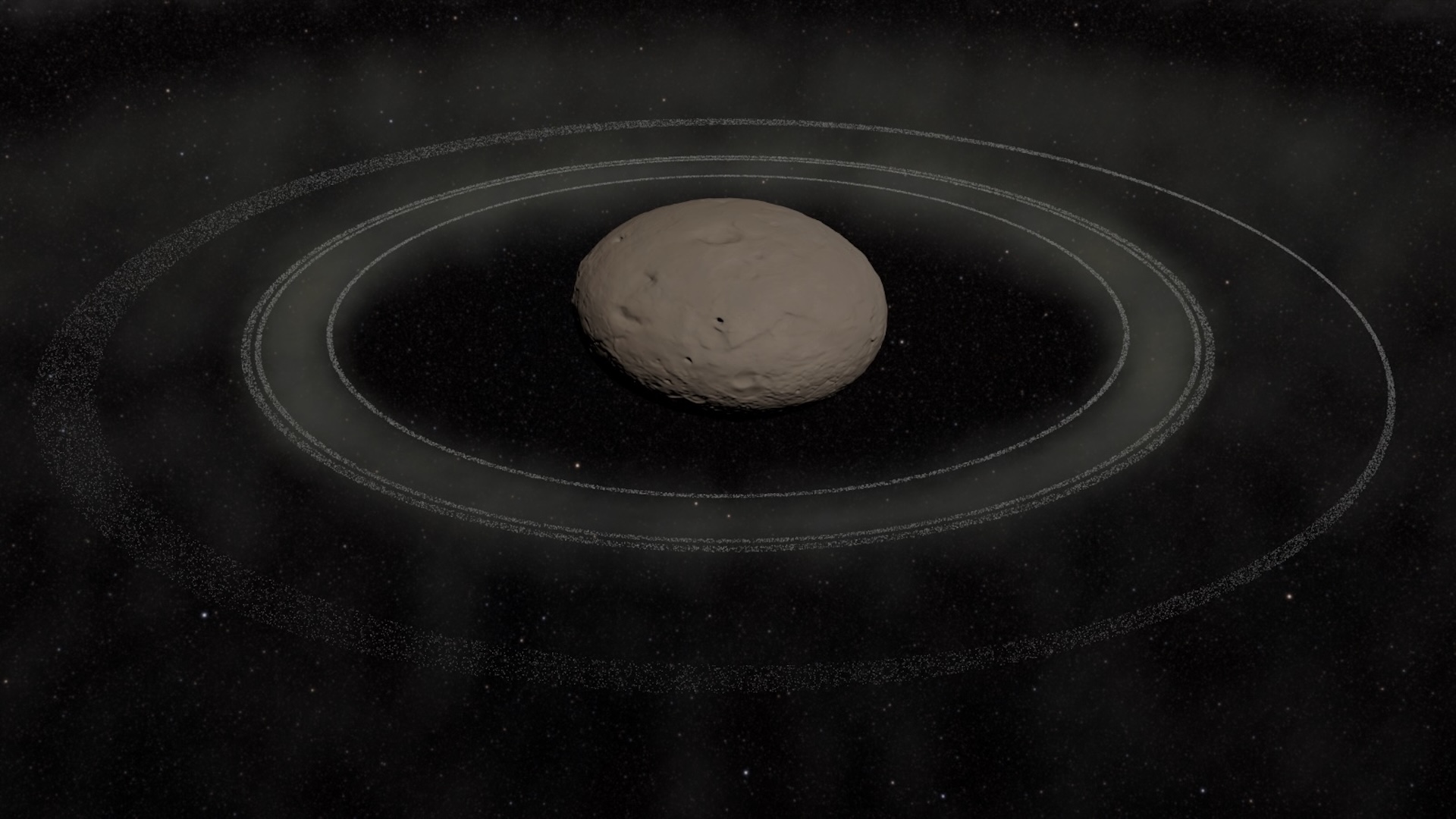 Strange object between Saturn and Uranus is 'evolving' its own ring system, study suggests
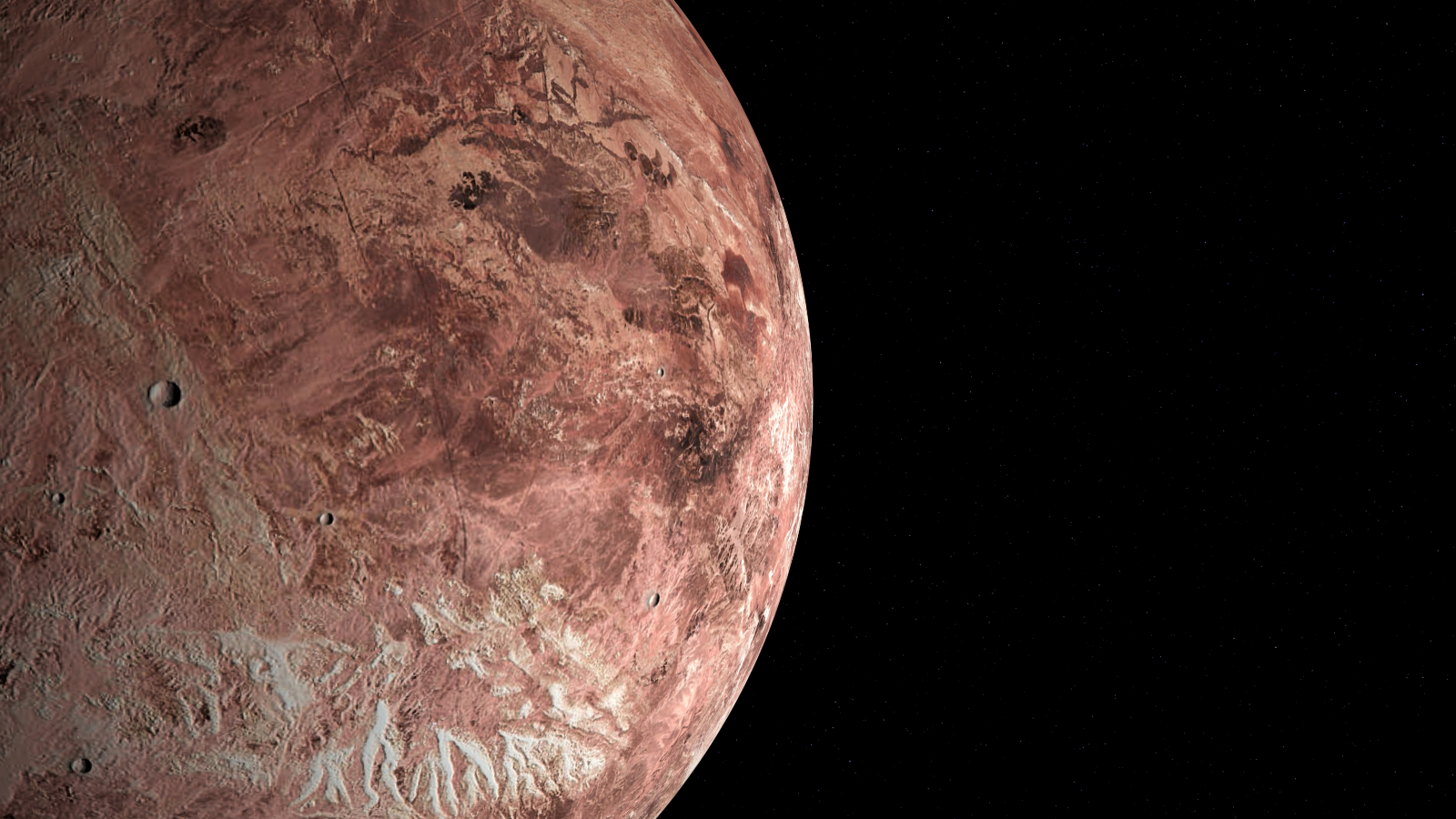 James Webb telescope spies a 'farting' dwarf planet with fluorescent gas in the outer solar system
 Comet 3I/ATLAS is losing water 'like a fire hose' on full blast
Latest in Saturn
Scientists find best evidence yet that icy moon Enceladus is habitable
Comet 3I/ATLAS is losing water 'like a fire hose' on full blast
Latest in Saturn
Scientists find best evidence yet that icy moon Enceladus is habitable
 Saturn will be at its biggest and brightest on Sept. 21 — here's how to see it
 Venus news, features and articles
 Uranus news, features and articles
 Saturn news, features and articles
 There's liquid on Titan, Saturn's largest moon. But something's missing and scientists are confused
Latest in News
There's liquid on Titan, Saturn's largest moon. But something's missing and scientists are confused
Latest in News
 Scientists build 'most accurate' quantum computing chip ever thanks to new silicon-based computing architecture
 Japan laser weapon trial, comet 3I/ATLAS bids farewell, and AI solves 'impossible' math problems
 Interstellar comet 3I/ATLAS makes closest pass of Earth. Where's it heading next?
 'Unprecedented' protoplanet collision spotted in 'Eye of Sauron' star system just 25 light-years from Earth
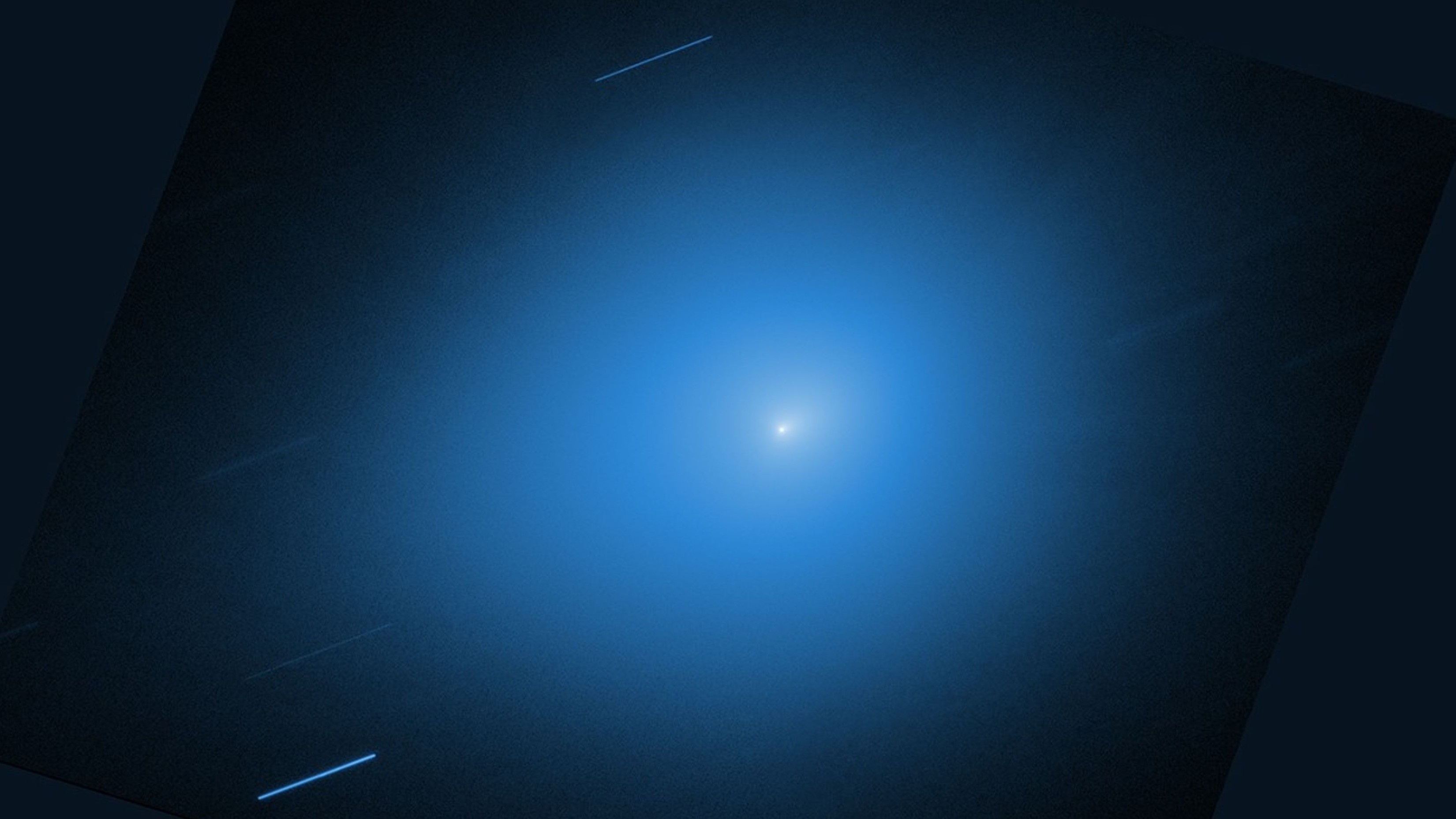 Comet 3I/ATLAS reaches its closest point to Earth tonight: How to see it
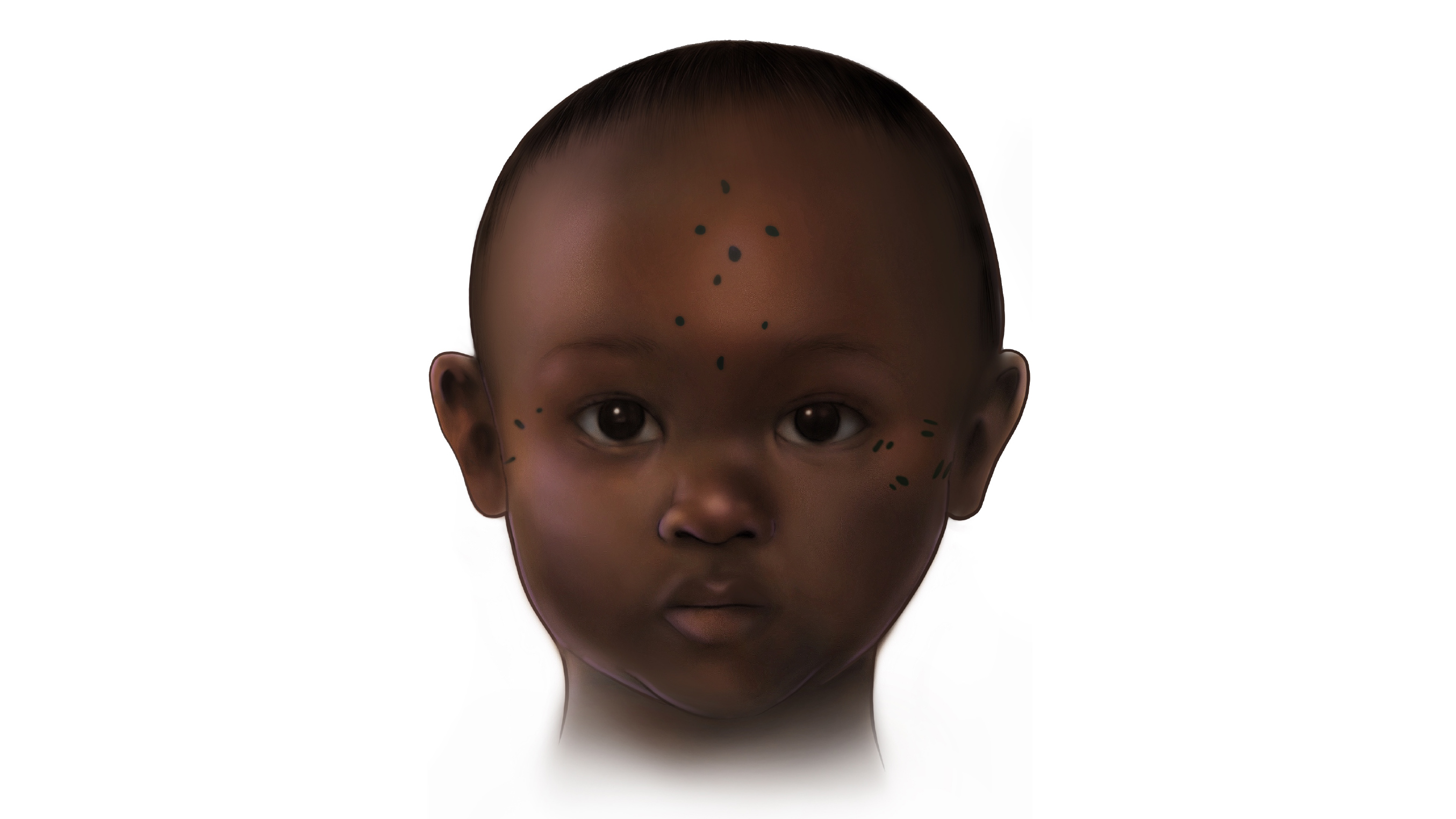 1,400 years ago, Nubians tattooed their toddlers. Archaeologists are trying to figure out why.
LATEST ARTICLES
1,400 years ago, Nubians tattooed their toddlers. Archaeologists are trying to figure out why.
LATEST ARTICLES 1The self-gifter's Christmas: Treat yourself to gear you'll actually want this Christmas
- 2Glittering new James Webb telescope image shows an 'intricate web of chaos' — Space photo of the week
- 3Why is Venus so bright?
- 4Celestron Showdown: Battle of the 10x42s
- 5Science news this week: Japan laser weapon trial, comet 3I/ATLAS bids farewell, and AI solves 'impossible' math problems