
- Technology
- Electric Vehicles
A new in-wheel motor for electric vehicles can deliver a record-breaking 1,000 horsepower to each wheel.
When you purchase through links on our site, we may earn an affiliate commission. Here’s how it works.
 (Image credit: Eugene Mymrin/Getty Images)
Share
Share by:
(Image credit: Eugene Mymrin/Getty Images)
Share
Share by:
- Copy link
- X
A new in-wheel motor for electric vehicles (EVs) delivers a massive amount of torque in a lightweight package, its developers say.
The motor — which was made by YASA, a subsidiary of Mercedes-Benz that also provides motors to Ferrari — weighs only 28 pounds (12.7 kilograms) but can deliver up to 1,000 horsepower at once or a sustained 469 to 536 hp for longer durations. This new mark breaks YASA's own previous unofficial record, a 29-pound motor that yielded 738 horsepower, company representatives said in a statement.
You may like-
 Toyota to launch world's first EV with a solid-state battery by 2027 — they're expected to last longer and charge faster
-
 New hydrogen battery can operate four times colder than before — meaning denser and longer-lasting EV batteries
-
 Scientists create new solid-state sodium-ion battery — they say it'll make EVs cheaper and safer
The ability to pack so much power into such a compact, lightweight motor is due in part to YASA's axial flux technology. Traditional radial flux motors are longer, tube-like structures, with a stator — the stationary part of a motor that creates a magnetic field used to produce motion — surrounding a cylindrical rotor. A magnetic field is passed perpendicularly to the shaft through the cylinder to spin the rotor.
By contrast, an axial flux motor is more like a pancake, with a disc-like rotor and stator. Magnetic flux passes along the axis parallel to the shaft (hence the name). The axial flux tech allows for much smaller designs than traditional radial designs, according to YASA.
Much lighter EVs in the future
The company emphasized that the design is scalable and doesn't rely on any rare or exotic materials to function.
The design also opens up a pathway for massive weight reduction in EV design. YASA said that deploying the in-wheel motors in lieu of a traditional power and drivetrain could save around 440 pounds (200 kg). And for vehicles designed from the ground up to incorporate the new motor, the savings could be closer to 1,100 pounds (500 kg).
Sign up for the Live Science daily newsletter nowContact me with news and offers from other Future brandsReceive email from us on behalf of our trusted partners or sponsorsBy submitting your information you agree to the Terms & Conditions and Privacy Policy and are aged 16 or over.This is in part because the system also incorporates advanced regenerative braking, the process by which electric vehicles capture energy that would normally be lost as heat during braking and utilize it to recharge the battery.
RELATED STORIES—Scientists create new solid-state sodium-ion battery — they say it'll make EVs cheaper and safer
—Toyota to launch world's first EV with a solid-state battery by 2027 — they're expected to last longer and charge faster
—'Midnight' eVTOL smashes its own record in latest test flight — bringing us closer to operational flying taxis
Instead of power being shunted from the battery to spin the wheels, energy from the wheels is captured to spin the motor, which generates electricity rather than consuming it. The motor resists the rotation while generating energy, thereby slowing the car and powering up the battery. YASA says efficient regenerative braking could reduce the need for traditional friction brakes, saving both weight and space.
While the current iteration is clearly geared toward high-performance EVs and supercars, axial flux motor technology opens the door for longer-range electric vehicles capable of generating more power with fewer, lighter components. The reduction in space required for traditional powertrain components also provides manufacturers an opportunity to streamline aerodynamics or provide more interior space for cargo or passengers.
 Alan BradleyFreelance contributor
Alan is a freelance tech and entertainment journalist who specializes in computers, laptops, and video games. He's previously written for sites like PC Gamer, GamesRadar, and Rolling Stone. If you need advice on tech, or help finding the best tech deals, Alan is your man.
Show More CommentsYou must confirm your public display name before commenting
Please logout and then login again, you will then be prompted to enter your display name.
Logout Read more New hydrogen battery can operate four times colder than before — meaning denser and longer-lasting EV batteries
 Watch four flying cars go toe-to-toe in new 'Formula One of the skies'
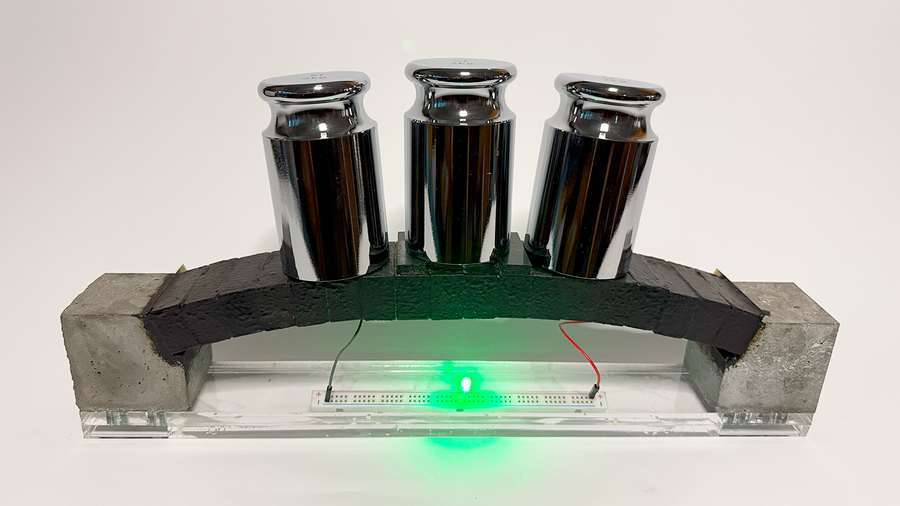 Self-healing 'concrete batteries' now 10 times better — they could one day power cities, scientists say
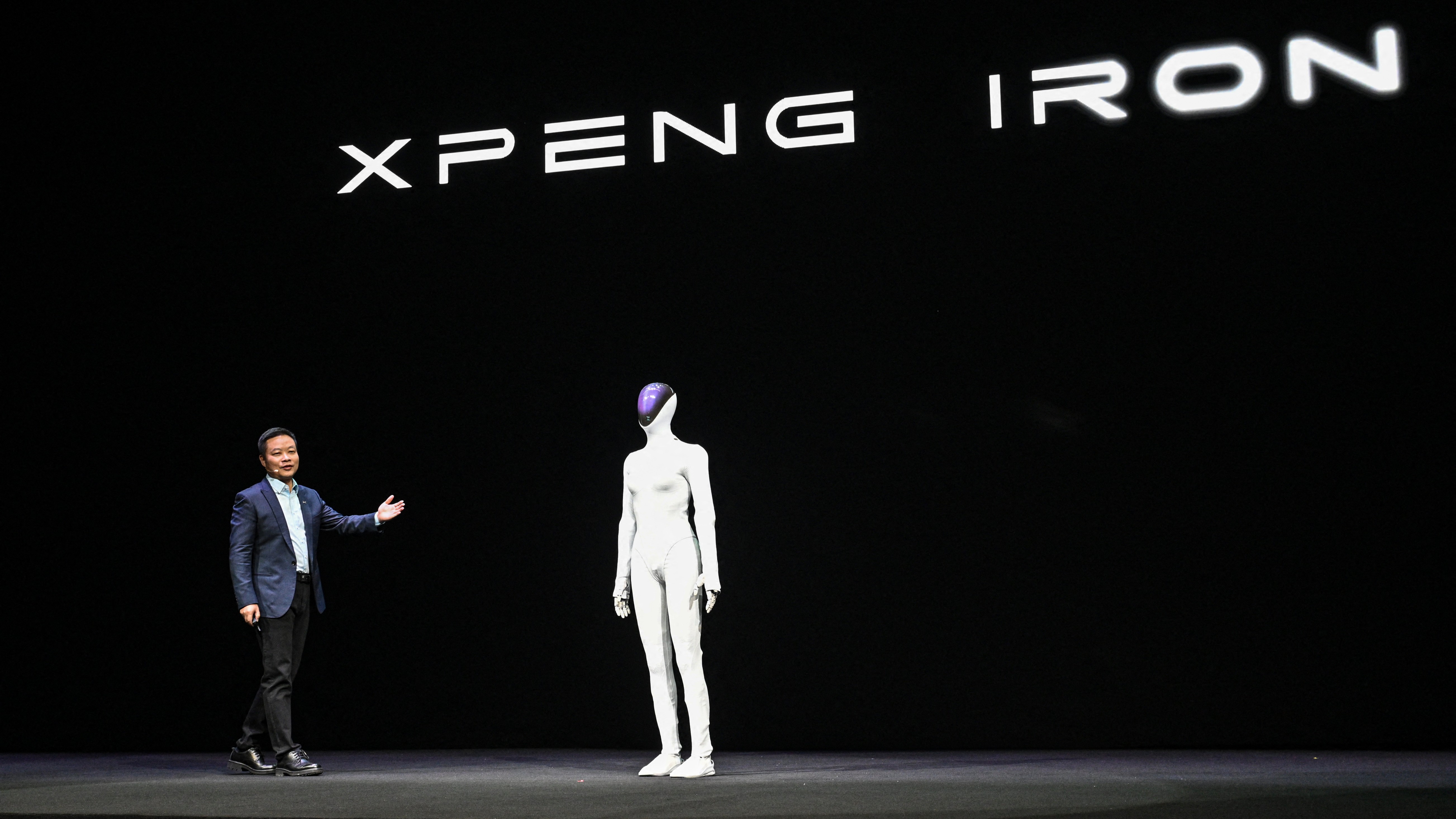 Watch: Chinese company's new humanoid robot moves so smoothly, they had to cut it open to prove a person wasn't hiding inside
 Humanoid robots could lift 4,000 times their own weight thanks to breakthrough 'artificial muscle'
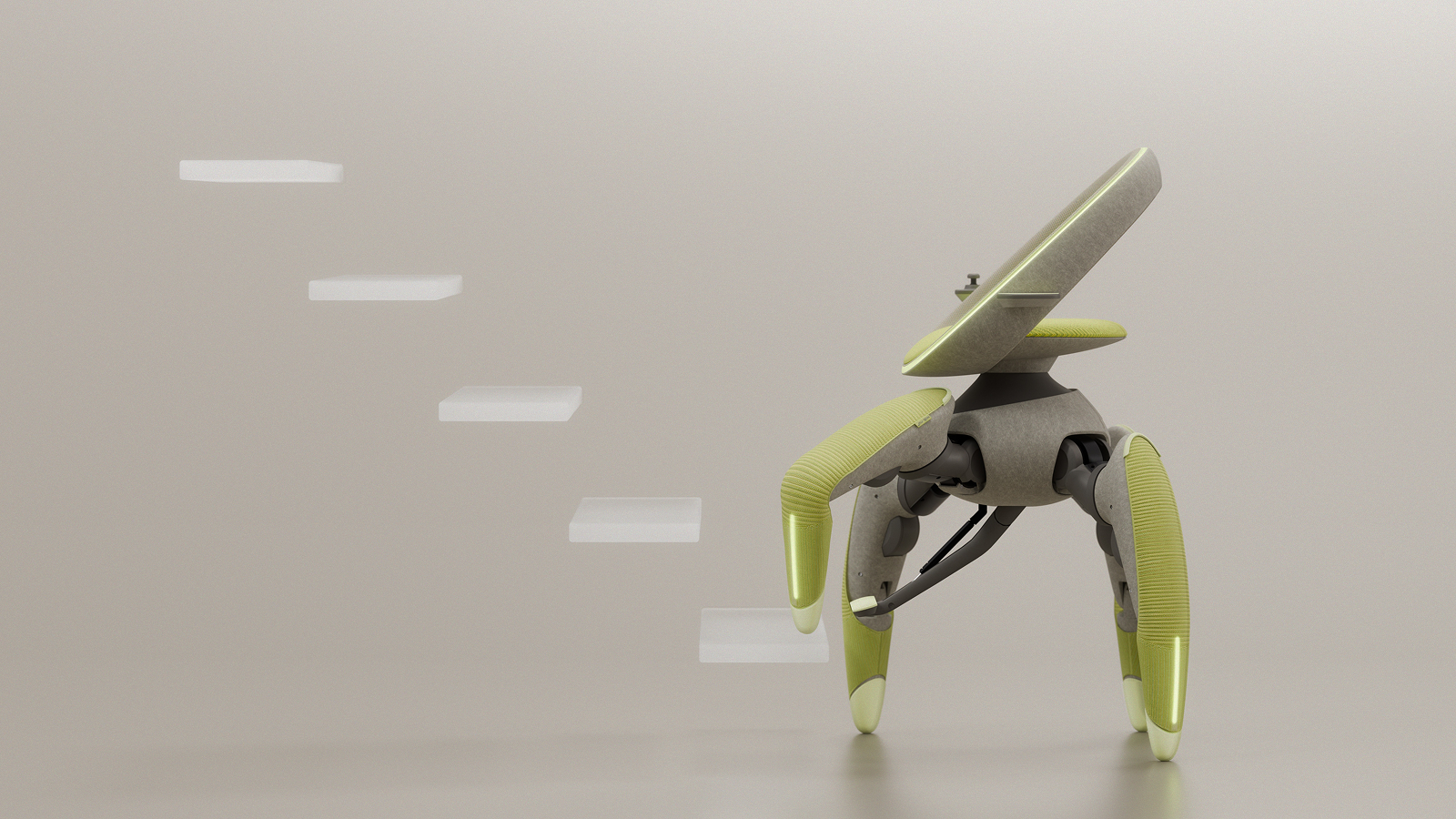 Bizarre robotic chair concept looks like a crab and can carry you around the house — it can even help you into your car
Latest in Electric Vehicles
Bizarre robotic chair concept looks like a crab and can carry you around the house — it can even help you into your car
Latest in Electric Vehicles
 Scientists create new solid-state sodium-ion battery — they say it'll make EVs cheaper and safer
Watch four flying cars go toe-to-toe in new 'Formula One of the skies'
Scientists create new solid-state sodium-ion battery — they say it'll make EVs cheaper and safer
Watch four flying cars go toe-to-toe in new 'Formula One of the skies'
 Toyota to launch world's first EV with a solid-state battery by 2027 — they're expected to last longer and charge faster
New hydrogen battery can operate four times colder than before — meaning denser and longer-lasting EV batteries
Toyota to launch world's first EV with a solid-state battery by 2027 — they're expected to last longer and charge faster
New hydrogen battery can operate four times colder than before — meaning denser and longer-lasting EV batteries
 'Midnight' eVTOL smashes its own record in latest test flight — bringing us closer to operational flying taxis
 New EV battery tech could power 500-mile road trips on a 12-minute charge
Latest in News
New EV battery tech could power 500-mile road trips on a 12-minute charge
Latest in News
 Scientists build 'most accurate' quantum computing chip ever thanks to new silicon-based computing architecture
New EV motor invention could cut 1,000 pounds from future vehicles, making them much lighter while boosting their range
Scientists build 'most accurate' quantum computing chip ever thanks to new silicon-based computing architecture
New EV motor invention could cut 1,000 pounds from future vehicles, making them much lighter while boosting their range
 Japan laser weapon trial, comet 3I/ATLAS bids farewell, and AI solves 'impossible' math problems
 Interstellar comet 3I/ATLAS makes closest pass of Earth. Where's it heading next?
 'Unprecedented' protoplanet collision spotted in 'Eye of Sauron' star system just 25 light-years from Earth
 Comet 3I/ATLAS reaches its closest point to Earth tonight: How to see it
LATEST ARTICLES
Comet 3I/ATLAS reaches its closest point to Earth tonight: How to see it
LATEST ARTICLES 1Reliquary of the Holy Crib: Remains of Jesus' manger from Bethlehem
- 2The self-gifter's Christmas: Treat yourself to gear you'll actually want this Christmas
- 3Glittering new James Webb telescope image shows an 'intricate web of chaos' — Space photo of the week
- 4Why is Venus so bright?
- 5Celestron Showdown: Battle of the 10x42s