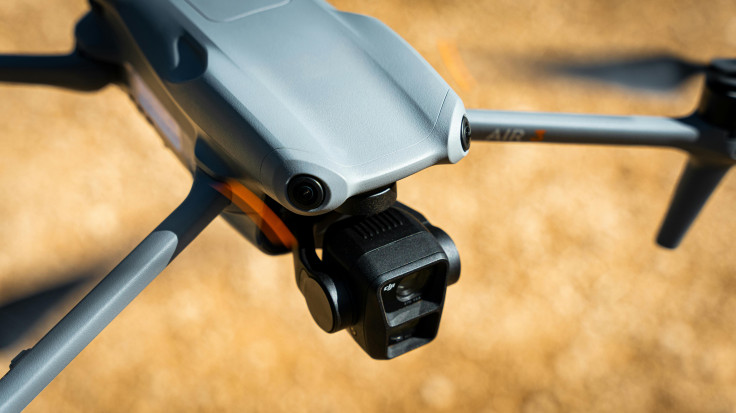
 Drone in flight
Via Pexels
Drone in flight
Via Pexels
The Federal Aviation Administration has imposed new drone flight restrictions creating no-fly zones around Department of Homeland Security facilities and mobile assets, a move that extends aviation security rules traditionally reserved for military bases to immigration enforcement operations across the country.
According to a notice to airmen published by the FAA, the restrictions prohibit drone flights within 3,000 feet horizontally and up to 1,000 feet vertically of DHS facilities, vehicles, vessels, and convoys.
The designated areas are classified as "national defense airspace," meaning the restrictions apply not only to fixed locations such as offices but also to moving Immigration and Customs Enforcement vehicles during enforcement actions.
The order replaces an earlier policy that limited drone restrictions to military installations and Department of Energy research sites, as 404 Media points out. Under the new framework, areas surrounding ICE operations in cities such as Minneapolis could temporarily fall under restricted airspace.
The notice warns that individuals who violate the restrictions may face criminal charges, civil penalties, and the loss of authorization to operate drones. It also states that drones deemed to pose a "credible safety or security threat" may be intercepted, seized, damaged, or destroyed.
The policy appears aimed at curbing the use of consumer drones to film DHS and ICE personnel during arrests and raids, a practice activists have increasingly used to document law enforcement activity. The FAA and DHS did not respond to requests for comment on whether a specific incident prompted the change.
Related-
Kristi Noem Says There Have Been Over 10,000 Arrests Of 'Criminal Illegal Aliens Who Were Killing Americans, Hurting Children'

-
Kristi Noem Walks Back Denial of Chemical Agent Use On Minnesota Protesters After Court Finds Evidence

The new restrictions come amid heightened scrutiny of ICE operations, particularly following the fatal shooting of Renee Nicole Good by an ICE agent in Minneapolis earlier this month. In recent weeks, Minnesota state lawmaker Brad Tabke has drawn criticism for posting real-time locations of ICE activity on social media, arguing the information was shared to promote public awareness and safety, with conservative figures accused him of endangering federal agents.
Similar monitoring efforts, however, have emerged elsewhere. In Oregon, community activists have built a database of license plates linked to immigration enforcement vehicles to help residents identify ICE presence, according to The Intercept. Organizers say the project is intended to reduce fear amid increased arrests, while federal officials have warned that efforts to track or obstruct agents could lead to prosecution.
DHS itself has previously deployed drones to monitor protests, including the use of Predator drones over demonstrations in Minneapolis in 2020 and over anti-ICE protests in Los Angeles last year. Videos circulating on social media this week showed aircraft circling Minneapolis, though it remains unclear whether they were drones.
© 2025 Latin Times. All rights reserved. Do not reproduce without permission.
Tags: Department of Homeland Security, U.S. Immigration and Customs Enforcement, Minneapolis, Drones