- Health
Using methods such as brain scans and symptom tracking, scientists are beginning to study whether a complex psychedelic brew known as ayahuasca can help rewire the brain's response to trauma.
When you purchase through links on our site, we may earn an affiliate commission. Here’s how it works.
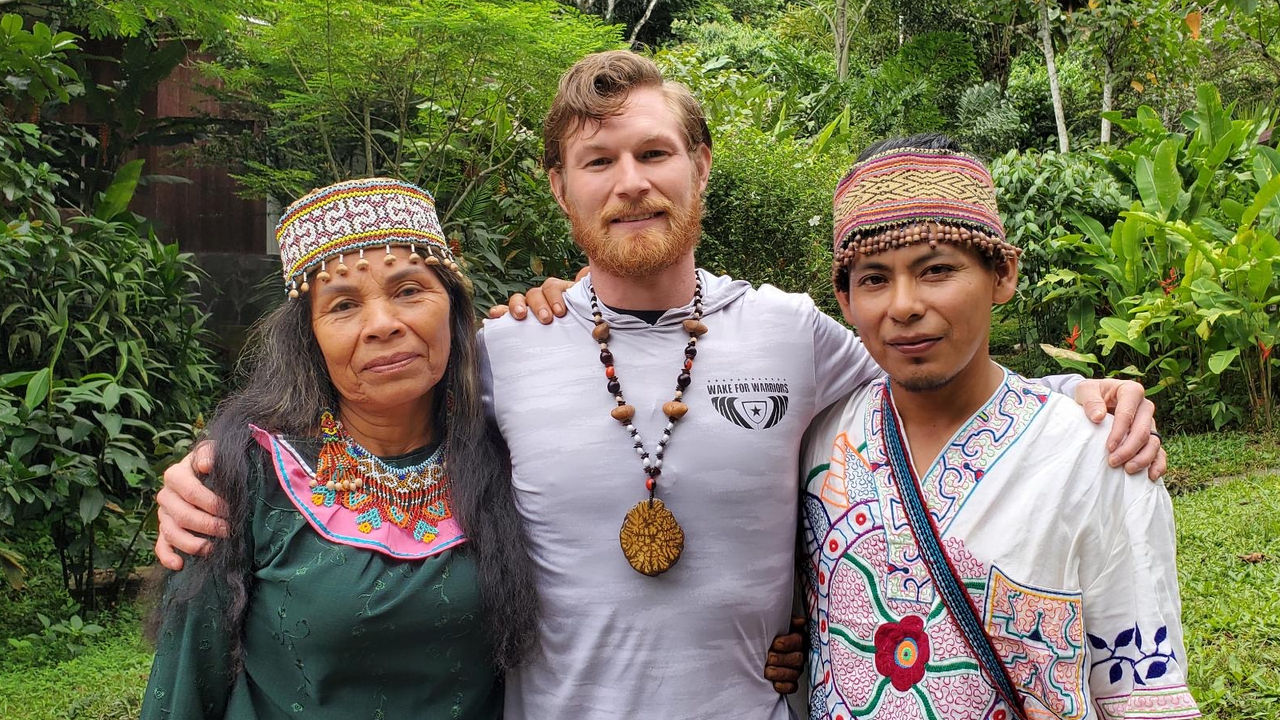
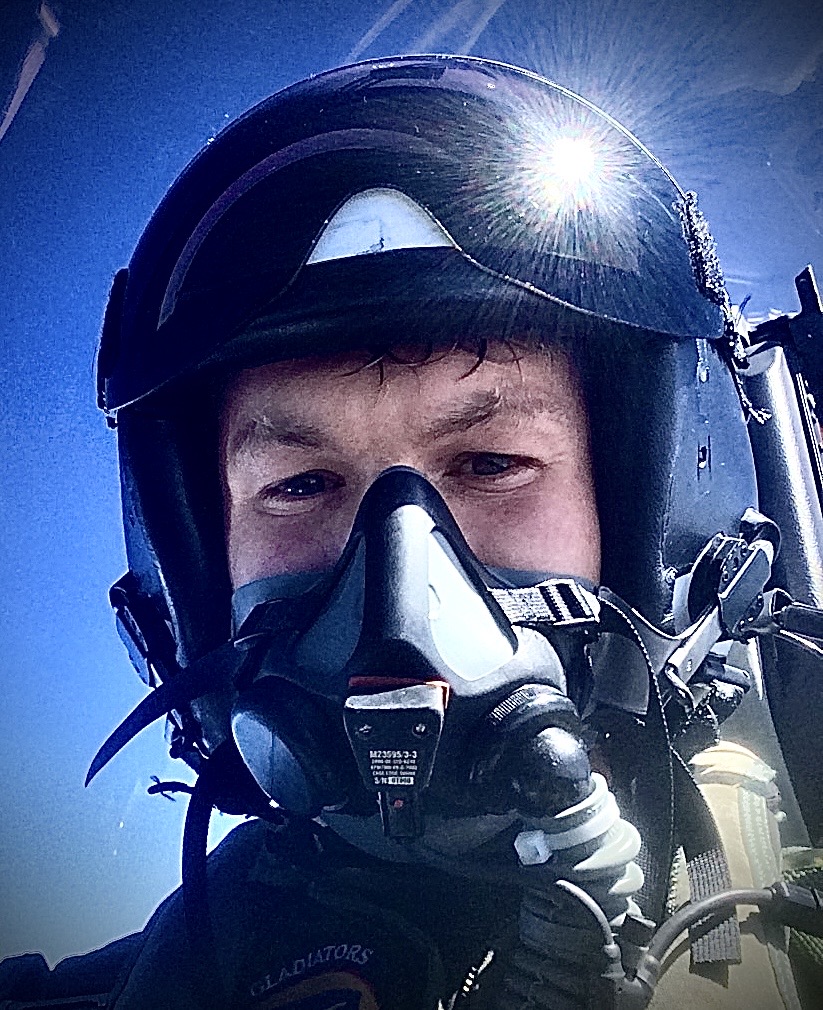
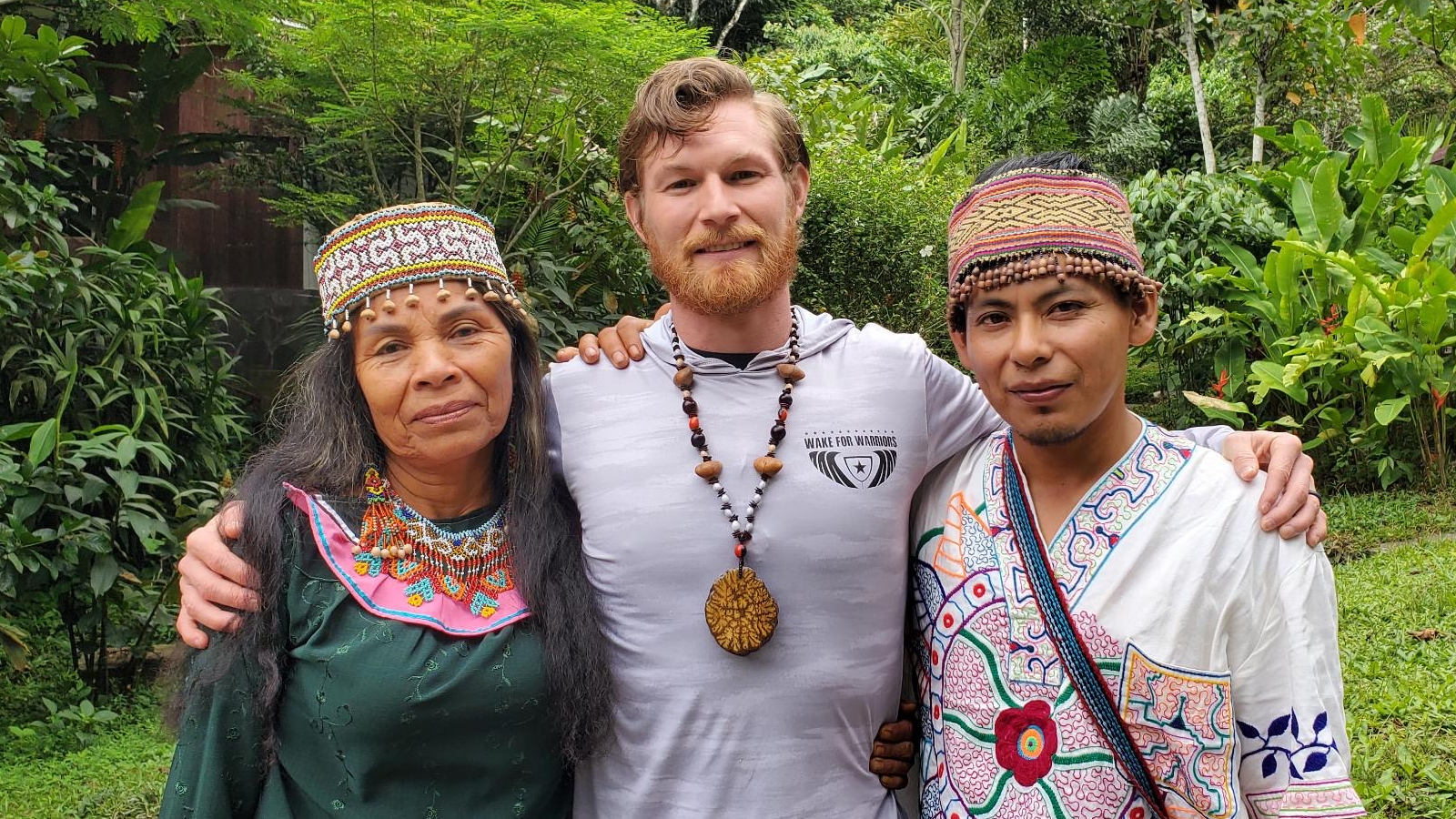 Former Navy pilot Kegan Gill says that an ayahuasca retreat in Peru hosted by the Heroic Hearts Project laid the groundwork for him to treat his PTSD. Here, Gill poses with two retreat facilitators.
(Image credit: Kegan Gill)
Former Navy pilot Kegan Gill says that an ayahuasca retreat in Peru hosted by the Heroic Hearts Project laid the groundwork for him to treat his PTSD. Here, Gill poses with two retreat facilitators.
(Image credit: Kegan Gill)
- Copy link
- X
Get the world’s most fascinating discoveries delivered straight to your inbox.
Become a Member in Seconds
Unlock instant access to exclusive member features.
Contact me with news and offers from other Future brands Receive email from us on behalf of our trusted partners or sponsors By submitting your information you agree to the Terms & Conditions and Privacy Policy and are aged 16 or over.You are now subscribed
Your newsletter sign-up was successful
Want to add more newsletters?

Delivered Daily
Daily Newsletter
Sign up for the latest discoveries, groundbreaking research and fascinating breakthroughs that impact you and the wider world direct to your inbox.
Signup +
Once a week
Life's Little Mysteries
Feed your curiosity with an exclusive mystery every week, solved with science and delivered direct to your inbox before it's seen anywhere else.
Signup +
Once a week
How It Works
Sign up to our free science & technology newsletter for your weekly fix of fascinating articles, quick quizzes, amazing images, and more
Signup +
Delivered daily
Space.com Newsletter
Breaking space news, the latest updates on rocket launches, skywatching events and more!
Signup +
Once a month
Watch This Space
Sign up to our monthly entertainment newsletter to keep up with all our coverage of the latest sci-fi and space movies, tv shows, games and books.
Signup +
Once a week
Night Sky This Week
Discover this week's must-see night sky events, moon phases, and stunning astrophotos. Sign up for our skywatching newsletter and explore the universe with us!
Signup +Join the club
Get full access to premium articles, exclusive features and a growing list of member rewards.
Explore An account already exists for this email address, please log in. Subscribe to our newsletterEDITOR'S NOTE — This story includes discussion of suicide. If you or someone you know needs help, the national suicide and crisis lifeline in the U.S. is available by calling or texting 988. There is also an online chat at 988lifeline.org.
In 2014, Navy fighter pilot Kegan "Smurf" Gill was at the controls of an F/A-18 Super Hornet when a catastrophic malfunction sent the jet into a 695 mph (1,118 km/h) dive. He ejected seconds before impact and survived massive trauma: broken limbs, a shattered neck and a severe brain injury.
You may like-
 Psychedelics may rewire the brain to treat PTSD. Scientists are finally beginning to understand how.
-
 'Zombie' cells may drive common form of epilepsy
-
 A fentanyl vaccine enters human trials in 2026 — here's how it works
Eventually, he received a diagnosis of delayed-onset post-traumatic stress disorder (PTSD), which "impacted his flying career like a warhead." As his flying career slipped away, he lost his sense of purpose and felt intense feelings of shame at letting down everyone who'd ever believed in him. He even thought about suicide.
Gill continued to receive medications, and then "life spun really out of control." He spent 40 days and nights locked in a Veterans Affairs inpatient psychiatric facility. "When I got out, I was a broken shell of a man in a drug induced stupor," Gill said.
This is not where his story ended, though. He connected with the Heroic Hearts Project (HHP), a nonprofit that links veterans with supervised psychedelic therapy abroad, and in Peru, Gill underwent treatment with the psychedelic ayahuasca — an experience that he credits with setting him on the road to healing.
Sign up for the Live Science daily newsletter nowContact me with news and offers from other Future brandsReceive email from us on behalf of our trusted partners or sponsorsBy submitting your information you agree to the Terms & Conditions and Privacy Policy and are aged 16 or over.The HHP has hosted more than 1,100 veterans and veteran spouses through its retreat programs, which are aimed at reducing or eliminating PTSD symptoms and improving the participants' quality of life. Most of the retreats have involved ayahuasca, a psychoactive brew traditionally used by Indigenous communities in the Amazon. Because ayahuasca is classified as a Schedule I controlled substance in the United States, these retreats are held in countries where the ceremony is legal.

But while anecdotal evidence abounds about the psychedelic drug's purported benefits, research into its effectiveness lags behind that of other psychedelics, such as MDMA and psilocybin. Only a few small studies have investigated ayahuasca for PTSD, and those have not been placebo-controlled, randomized clinical trials — the gold standard for showing that a drug is effective. This makes it difficult to tease apart whether ayahuasca reduces PTSD symptoms, or whether other factors — such as therapy or the retreat environment — may be what helps resolve PTSD symptoms.
Further complicating matters, the botanical brew of ayahuasca contains two main components: the psychoactive DMT (N,N-Dimethyltryptamine) and beta-carbolines. The concentration of these ingredients varies among batches, making it difficult to create a standardized, repeatable dose required for rigorous clinical trials. In contrast, MDMA and psilocybin are single molecules, which can be synthesized and packaged as a pure, consistent and standardized pill or capsule that is much easier to use in a research setting. Also, pharmaceutical companies face challenges when trying to secure patents on ayahuasca, thus reducing the financial incentive for the massive private investment needed for large-scale clinical trials.
You may like-
'Zombie' cells may drive common form of epilepsy
-
A fentanyl vaccine enters human trials in 2026 — here's how it works
-
 A woman experienced delusions of communicating with her dead brother after late-night chatbot sessions
"It is probably never going to be a treatment in the traditional sense in the United States because it is a plant concoction," clinical psychologist Gregory Fonzo, co-director of the Charmaine and Gordon McGill Center for Psychedelic Research and Therapy at the University of Texas at Austin's Dell Medical School, told Live Science.
Measuring impact
Still, some researchers are trying to measure the drug's impact on PTSD symptoms. The research arm of HHP designed and conducted an observational study that followed 58 veterans; 45 attended an ayahuasca retreat, and 13 went to a psilocybin retreat, between 2021 and 2024.
The scientists tracked changes in the participants' mental health before and after their psychedelic experiences. They found that participants in both arms showed an average 29% reduction in depression symptoms and a 26% reduction in PTSD symptoms, along with improvements in anxiety, sleep, emotional well-being and quality of life.
"We only took veterans who met criteria for having PTSD, and more than 80% of them no longer met that criteria anymore," neuroscientist Grace Blest-Hopley, HHP's director of research, told Live Science.
To investigate further, Fonzo is currently collaborating with HHP and leading a study to examine the brain responses of combat veterans with PTSD and how they are altered following a course of ayahuasca treatment.
The Texas researchers are collecting a variety of brain imaging and clinical data, blood measures and electroencephalographic (EEG) recordings from veterans before and after they attend an ayahuasca retreat. The EEG data provides a way to identify objective, biological markers of PTSD. The scientists aim to recruit 40 participants for the study, which will probably take another year to complete, Fonzo said.
A complex concoction
In the HHP observational study, while both ayahuasca and psilocybin groups showed a reduction in symptoms after treatment, ayahuasca appeared slightly more effective. However, the researchers cautioned that the study was not designed to directly compare treatments.
Fonzo thinks both compounds operate in a two-phase process. In the first phase, the psychedelics disrupt the psychological patterns that people are stuck in and effectively "shake up the snow globe." The second phase is marked by an enhancement of neuroplasticity, which is the ability to forge new connections between neurons. This second phase can last a few weeks. "That creates an opportunity for people to glean and consolidate insights and reshape their brain in a way that is more conducive to mental health," Fonzo said.
To have this effect, both psilocybin and DMT, the main active part of ayahuasca, activate the serotonin 2A receptor in the brain. But the ayahuasca brew also contains beta-carbolines, which boost the levels of the key mood chemicals serotonin and norepinephrine in the body and brain. The DMT in ayahuasca also has its own unique targets, such as the "sigma-1 receptor," leading to a broader and more complex effect on the brain's chemistry than is found with psilocybin, Fonzo said.
Still, research on ayahuasca is in its early stages, Fonzo said, and it is hard to tease apart how other aspects of the retreat experience influence the effectiveness of the drug.
SCIENCE SPOTLIGHT
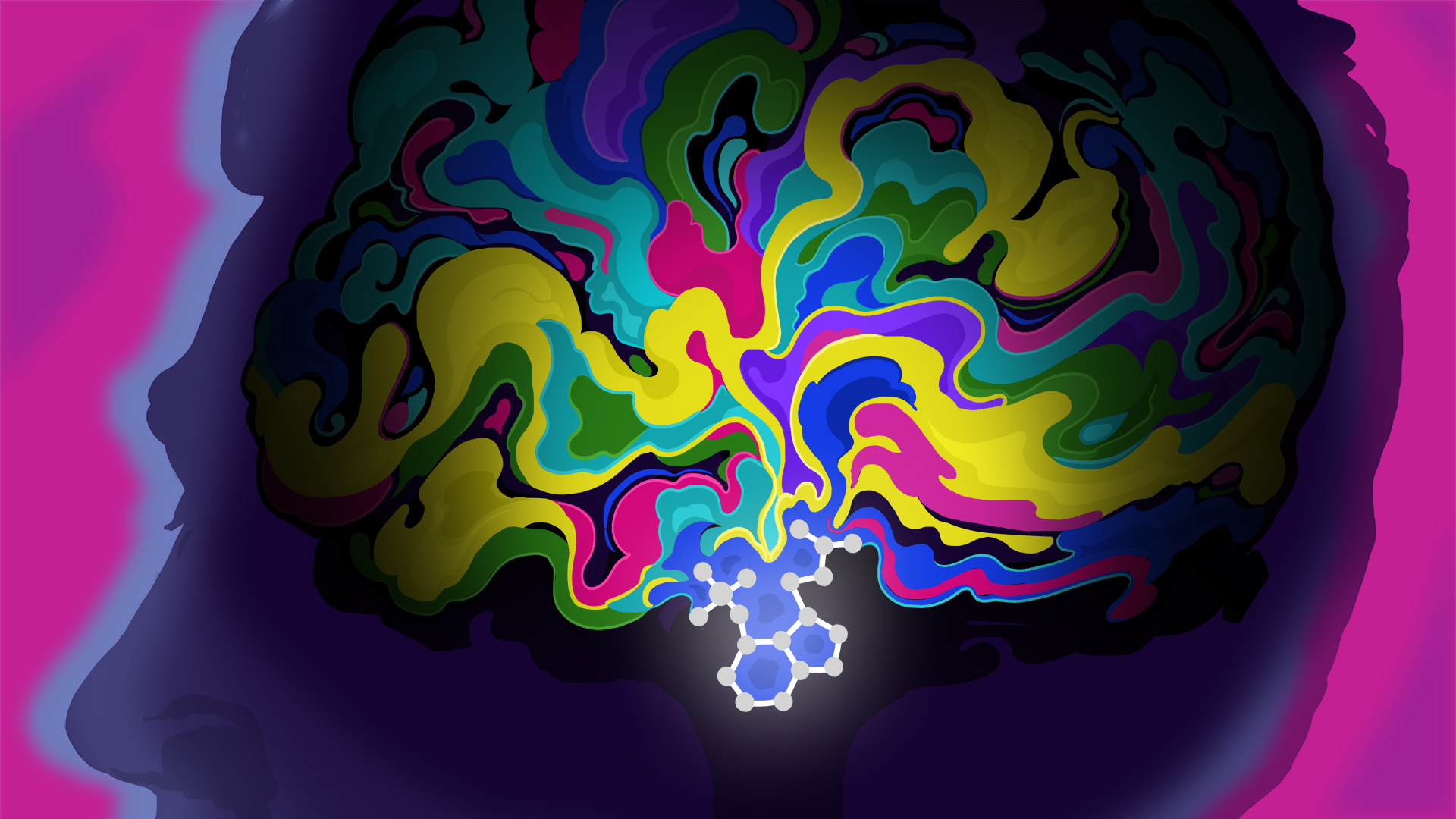
—Psychedelics may rewire the brain to treat PTSD. Scientists are finally beginning to understand how.
New research shows MDMA and psilocybin may restore neural flexibility in people with PTSD, thereby helping the brain unlearn fear and relearn safety.
For example, the HHP retreats place a strong emphasis on processing and integrating the psychedelic experience, which can include therapy, community support and lifestyle changes. "If you just do the medicine and then come out and carry on as normal and don't make some changes, our brains will just go back to how they were before," Blest-Hopley theorized.
Gill agreed. He feels that ayahuasca shattered the darkness he was living in and changed him at his core. But he began to heal after that, when he focused on sleep, nutrition, exercise, reconnection to nature and community, and meditation, he said. Now an ultra-endurance athlete, motivational speaker and coach who has written a book about his experiences, Gill says he wants to offer inspiration to anyone facing seemingly insurmountable challenges.
"I was able to regrow myself from within," Gill said. "Now, I get to be the father, husband, son and friend that I was always meant to be."
 Jane PalmerLive Science Contributor
Jane Palmer is a Colorado-based journalist who is contributing to Live Science with a focus on biodiversity conservation, neuroscience and mental health. She has written about science for many outlets including Nature, Science, Eos Magazine, Al Jazeera, BBC Earth, BBC Future, Mosaic Science and Proto Magazine. Before becoming a journalist, Palmer was a scientist, and she earned a bachelor's degree in cognitive science and a doctorate in computational molecular modeling from the University of Sheffield in England. She enjoys reading and being outside in nature whenever possible, preferably climbing rocks.
View MoreYou must confirm your public display name before commenting
Please logout and then login again, you will then be prompted to enter your display name.
Logout Read more 'Zombie' cells may drive common form of epilepsy
 A fentanyl vaccine enters human trials in 2026 — here's how it works
 A woman experienced delusions of communicating with her dead brother after late-night chatbot sessions
 A 'functional cure' for HIV may be in reach, early trials suggest
 5 genetic 'signatures' underpin a range of psychiatric conditions
 Lab mice that 'touch grass' are less anxious — and that highlights a big problem in rodent research
Latest in Health
Lab mice that 'touch grass' are less anxious — and that highlights a big problem in rodent research
Latest in Health
 The 'mono' virus raises the risk of MS and cancer in some. 22 genes hint at why.
Psychedelics may rewire the brain to treat PTSD. Scientists are finally beginning to understand how.
The 'mono' virus raises the risk of MS and cancer in some. 22 genes hint at why.
Psychedelics may rewire the brain to treat PTSD. Scientists are finally beginning to understand how.
 Men develop cardiovascular disease 7 years before women
 Preserved hair reveals just how bad lead exposure was in the 20th century
 Lifespan may be 50% heritable, study suggests
 'Nose-in-a-dish' reveals why the common cold hits some people hard, while others recover easily
Latest in Features
'Nose-in-a-dish' reveals why the common cold hits some people hard, while others recover easily
Latest in Features
 Bandera Volcano Ice Cave: The weird lava tube in New Mexico whose temperature is always below freezing
 Trippy 'biomass' snap reveals first detailed look at our planet's carbon stores
 When were boats invented?
Psychedelic drug ayahuasca could treat PTSD, early studies hint. But exactly how it works isn't clear.
When were boats invented?
Psychedelic drug ayahuasca could treat PTSD, early studies hint. But exactly how it works isn't clear.
 Ancient lake full of crop circles lurks in the shadow of Saudi Arabia's 'camel-hump' mountain
 Ribchester Helmet: A rare 'face mask' helmet worn by a Roman cavalry officer 1,900 years ago
LATEST ARTICLES
Ribchester Helmet: A rare 'face mask' helmet worn by a Roman cavalry officer 1,900 years ago
LATEST ARTICLES- 1Bandera Volcano Ice Cave: The weird lava tube in New Mexico whose temperature is always below freezing
- 2Every major galaxy is speeding away from us, except one — and we finally know why
- 3The 'mono' virus raises the risk of MS and cancer in some. 22 genes hint at why.
- 4Spotted lanternflies are invading the US. They may have gotten their evolutionary superpowers in China's cities.
- 5Kanzi the bonobo could play pretend — a trait thought unique to humans